

“Workers and K-food”
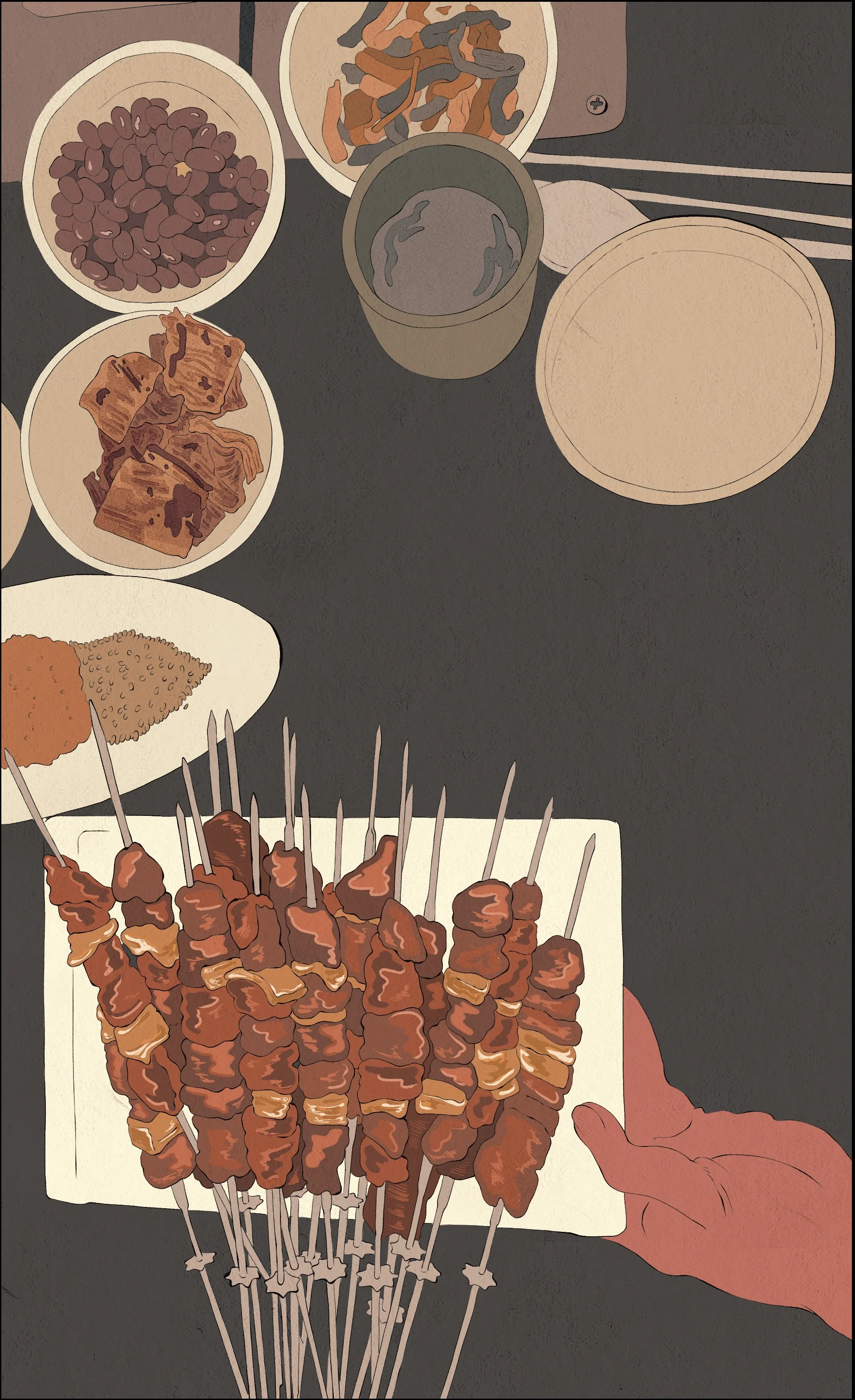
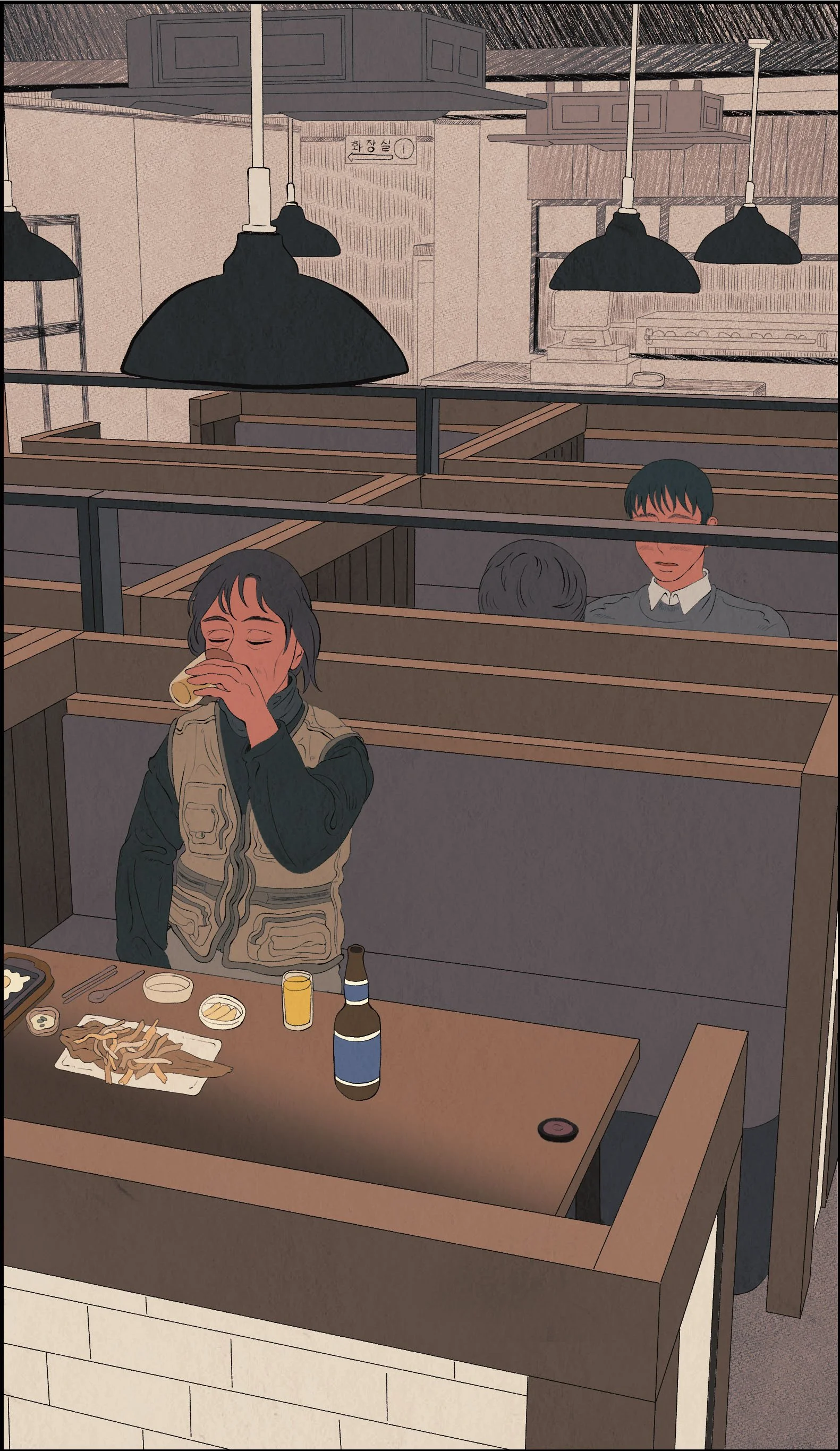
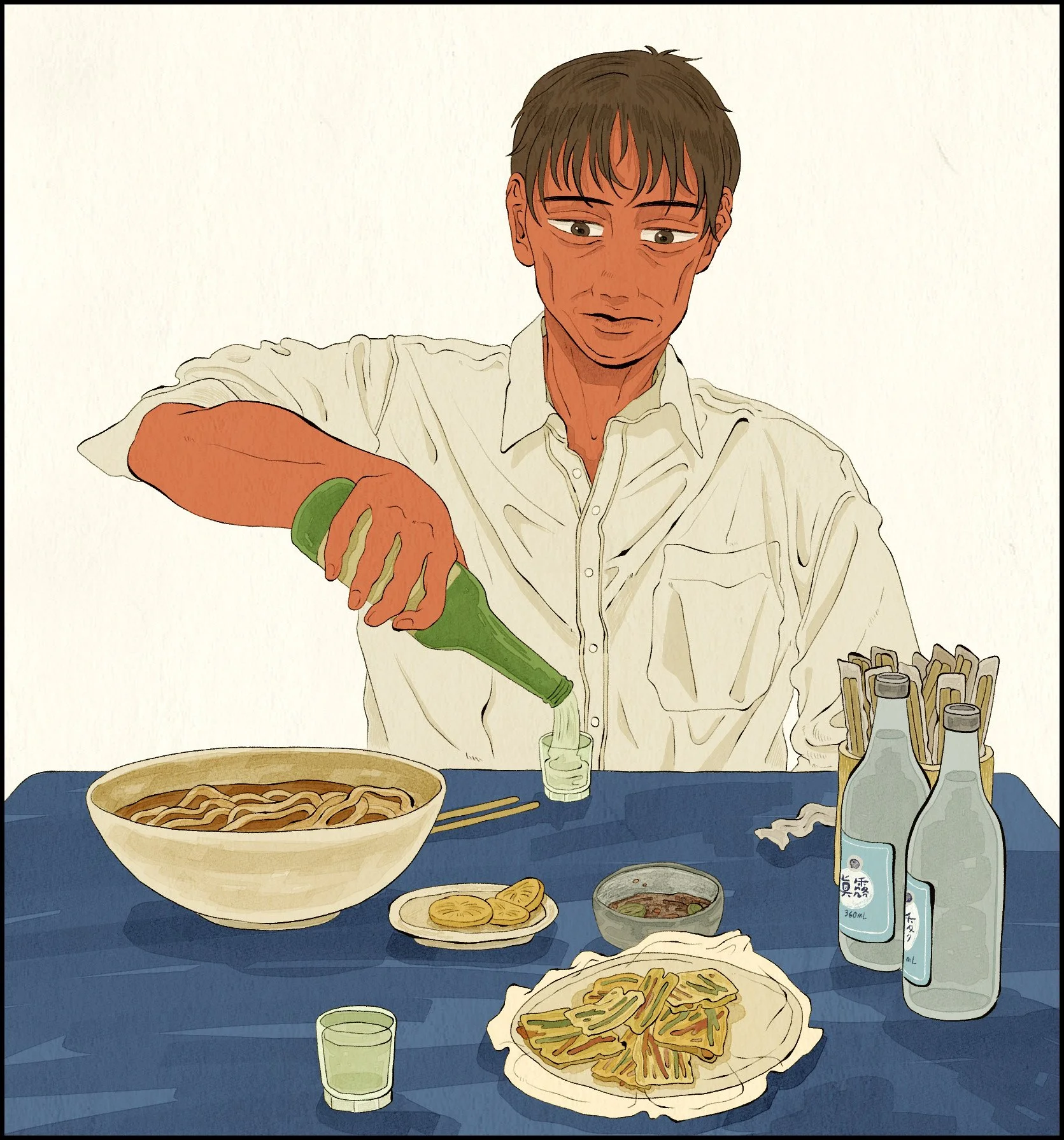
Jeon Nak-joo's series of illustrations is inspired by Korean everyday life in the period from 1980 to today. Nak-joo's drawings came about in dialogue with Martin Petersen and are based on her own observations in Seoul, at the DMZ, and among the Korean minority in Osaka, as well as research on Korea's recent history. In a number of the illustrations of everyday situations from 1980 to today, one person recurs. He re-enacts a range of everyday situations related especially to food and drinking culture in Korea. In this essay, Lee Min-jae writes about Korean food and working life, taking Jeon Nak-joo's illustrations as a starting point.
Intro by: Martin Petersen
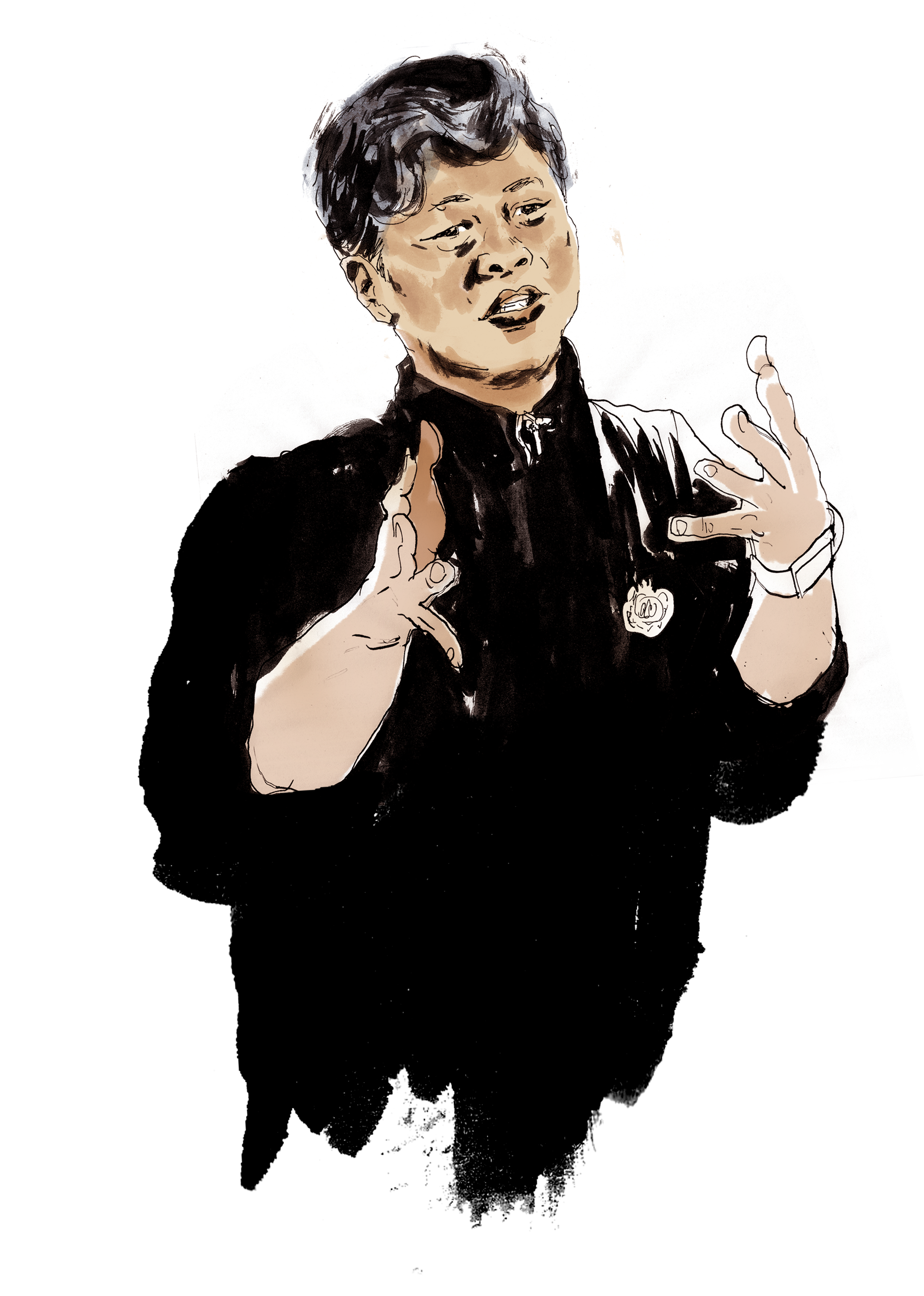
Illustration: Rasmus Meisler
Workers and K-food
By: Lee Min-jae, researcher, Institute of Cultural and Natural Heritage, Mokpo National University
1. K-food – the workers’ food
What comes to mind when you hear "Korean food"? Gimbap, bulgogi, tteokbokki, diluted soju, Korean fried chicken, and ramyeon are among the dishes that today fall under the label "K-food" and enjoy great global popularity. Seen from a Korean perspective, this change in status over the past ten years is nothing short of surprising. Honestly, the question often arises: why have precisely these dishes become popular around the world? The explanation isn't obvious, because these dishes aren't regarded as what Koreans call "gastronomy" (fine dining), but are rather completely ordinary everyday food — the kind of food Koreans encounter and eat every day.
There's an interesting common thread in the history and culture behind the dishes associated today with K-food. Although the origins of the individual dishes vary, the vast majority first truly took root in Koreans' everyday life around the 1970s. This decade marks a decisive turning point in Korea's modern history. From this period, the country experienced the economic growth that has become known as the "Miracle on the Han River," and underwent a so-called compressed modernization. This modernization process brought sweeping changes across politics, society, economy, and culture — and food culture was no exception.
The Korean food anthropologist Joo Young-ha has pointed to four central developments in modern and contemporary Korean food culture: first, the industrialization of food; second, the rapid growth in eating-out and restaurant culture; third, the shift from a rice-centred meal toward a greater focus on side dishes and small dishes; and fourth, a marked hybridity as a result of colonial experiences and American-dominated Western influence. Many of these changes — particularly those concerning everyday food culture — were consolidated starting from the 1970s.
The man in Jeon Nak-joo's illustrations is a worker. The food and drink he mainly consumes are ordinary Korean everyday dishes. Seen from a class perspective, however, these are precisely the dishes that, through the working class's consumption, have become deeply rooted in Korean everyday life. In this text, I follow the traces of the dishes he ate, in order to examine the changes in Korean food culture that lie hidden beneath the surface.
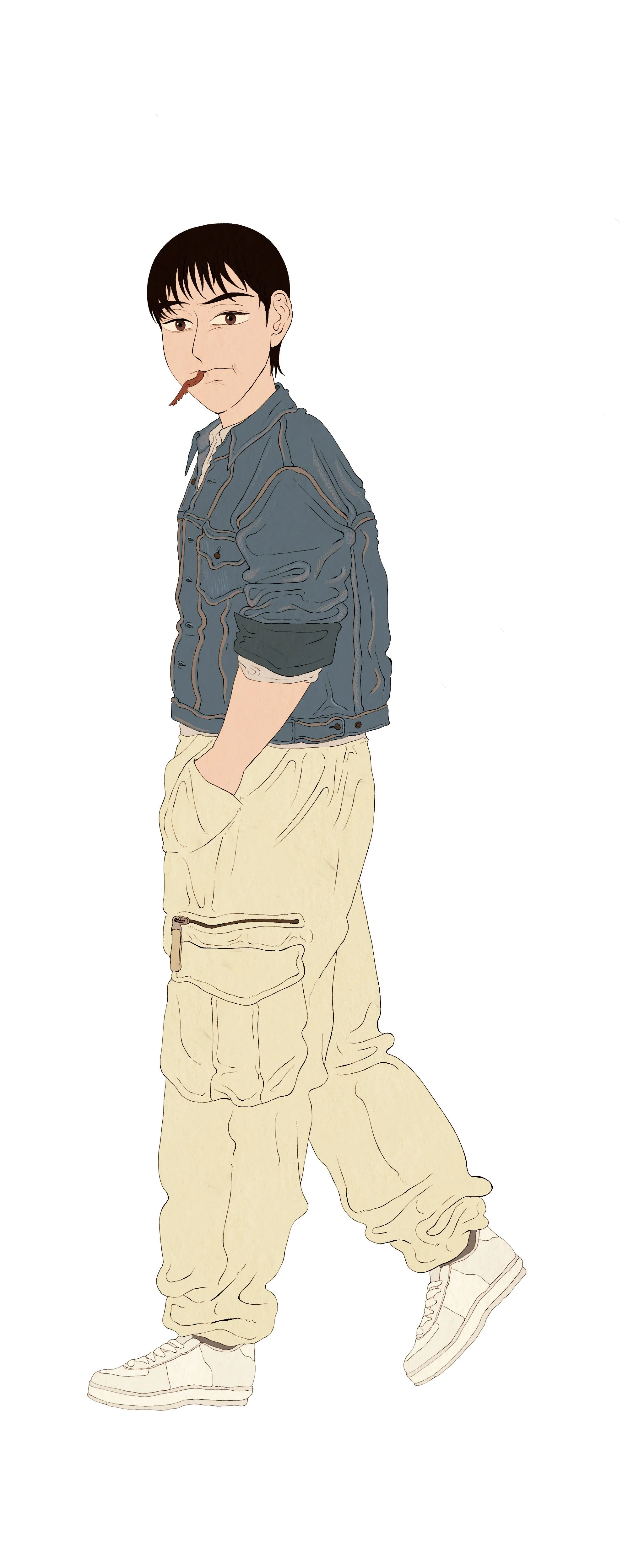
Illustration:
Jeon Nak-joo
Illustrations: Jeon Nak-joo
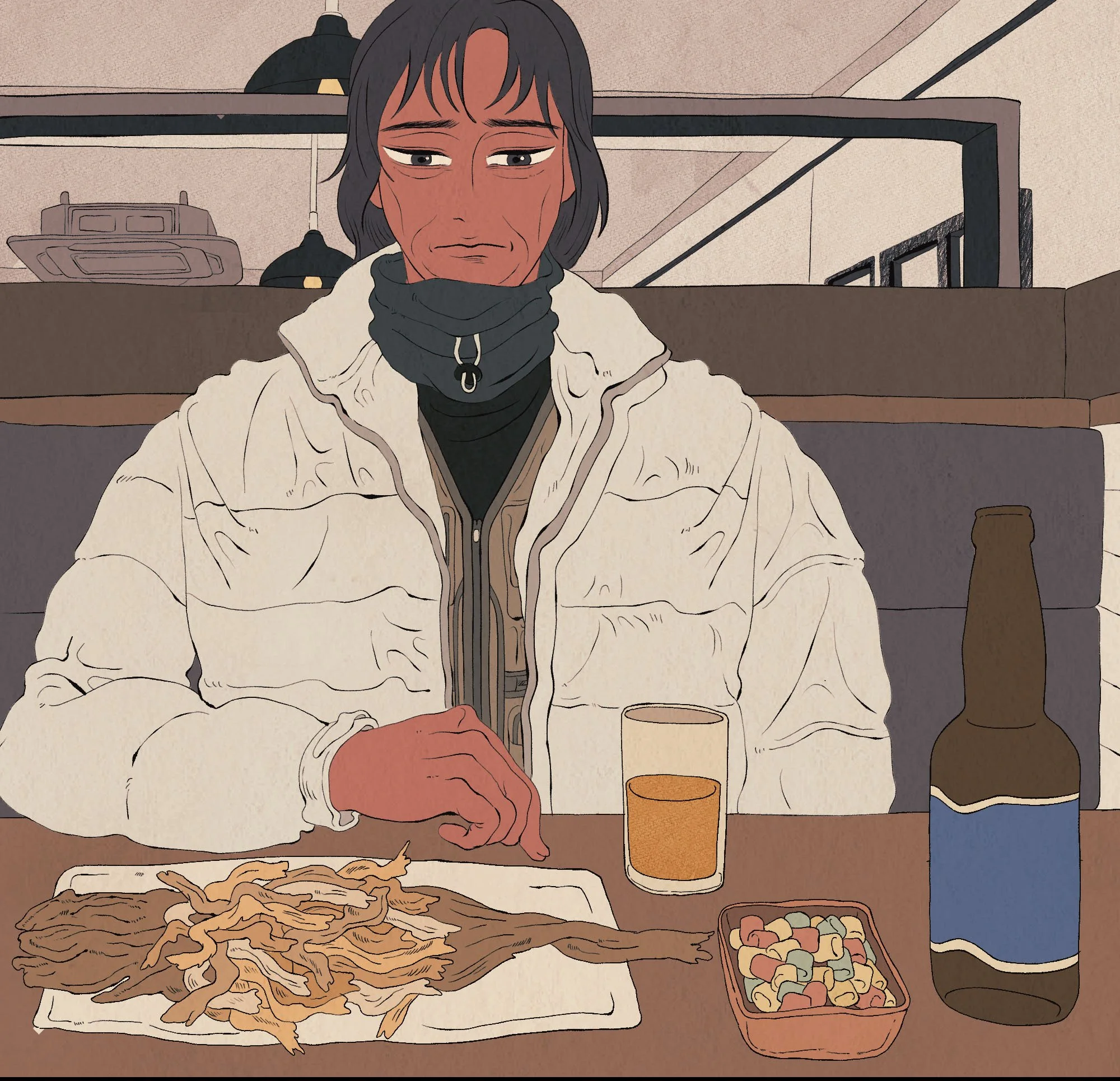
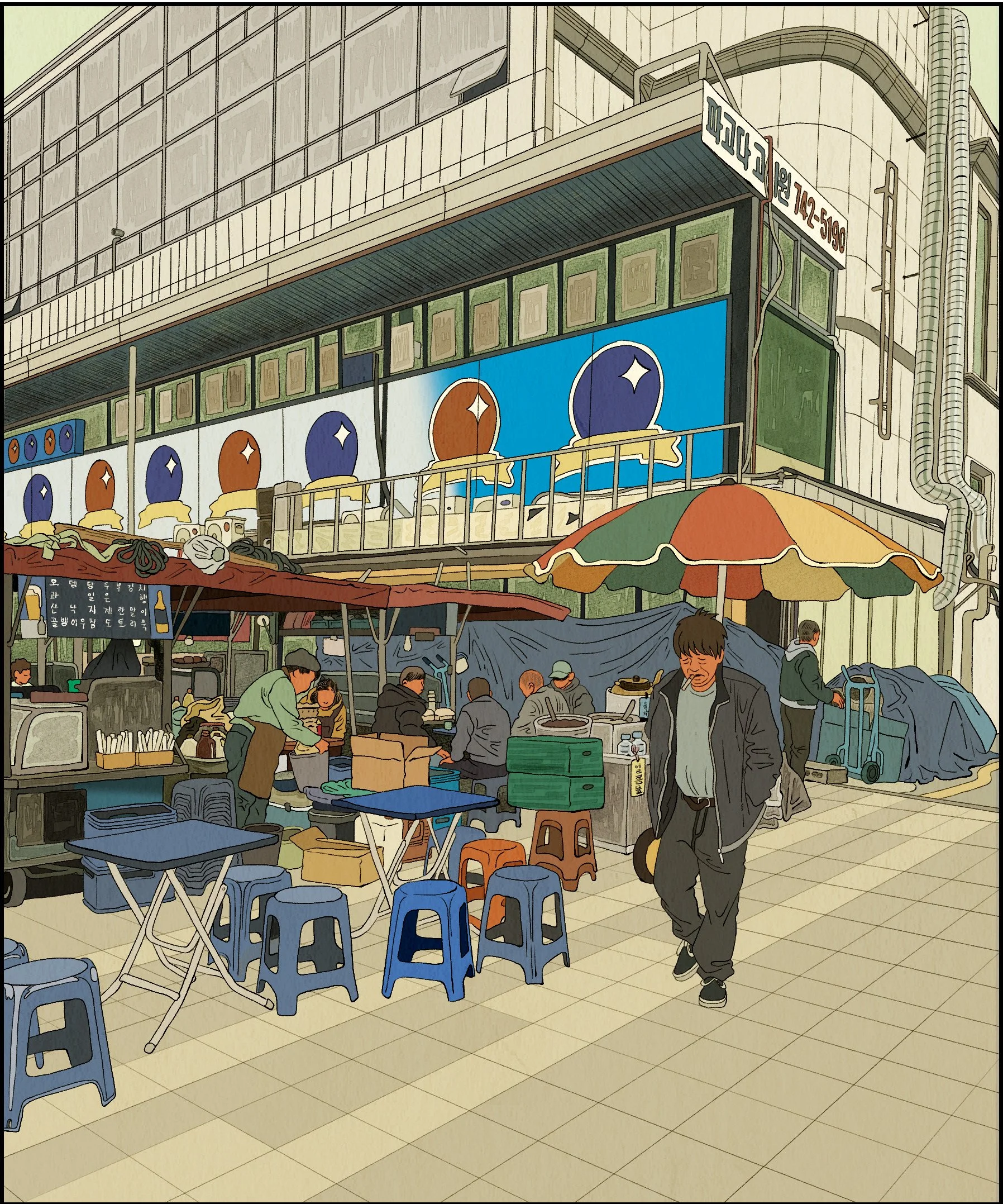
2. The growth of restaurant and eating-out culture: Why doesn't he cook at home, but buys his food out?
Let's first look at the first central feature. We almost never see the man cook at home. He mostly eats out. Restaurant and eating-out culture has existed in Korean society since the late Joseon period (1392–1897). During the Japanese colonial period (1910–1945), it really began to take shape in the cities, where restaurants sold region-specific dishes. In Gyeongseong (present-day Seoul), the colonial era's largest city, the number of eateries grew to an extent that approached a kind of mass culture. Even so, the size of the market back then was vanishingly small compared with today, where the Korean eating-out sector is worth around 192 trillion won (about 130 billion USD). The real turning point, where eating out truly began to permeate Koreans' everyday life, came in the 1970s.
In Korea there are many ways to classify meals, but the most fundamental distinction is between jipbap (home-cooked food) and oesik (eating out). Eating out generally refers to a meal you buy for payment. Originally the word literally meant "to eat outside the home," but in a capitalist society, eating out quickly became synonymous with buying food, and this meaning became firmly established. Paradoxically, this points to the fact that the foundation of Korean food culture has traditionally been home-cooked food. But as the number of workers living in the cities grew, eating out came to take up more space than home-cooked meals. Although working hours in Korea have been reduced compared with the past, they are still among the longest in the world. Combined with the expansion of the cities and the resulting long commuting distances, this has meant that Korean workers have structurally been forced to base their everyday lives on eating out.
Looking more closely at the development through the lens of food anthropologist Joo Young-ha's analyses, one can see that the 1970s marked a cultural shift in Korean food culture. Where the diet was previously centred on rice and soup, with the side dishes (banchan) playing a secondary role, these very dishes gradually began to become the meal's main attraction. At the same time, there was a move away from the traditional hansang-charim — a meal format in which rice, soup, and many small dishes are served together on the table — and toward a more widespread ilpum-yori model, in which a single dish constitutes an entire meal.
In this process, foods that were previously regarded as side dishes began to appear as main dishes. In particular, dishes based on meat or fish, as well as dishes spicy enough to be almost painful, gained marked ground in this period.
Following on from this, after the 1970s Korea experienced strong growth in restaurants where meat or fish — rather than rice — formed the meal's focal point. Among the most characteristic examples are samgyeopsal restaurants (grilled pork belly), fried-chicken restaurants, and restaurants serving raw fish (hoe). All are today significant representatives of what is internationally called K-food. The emergence of popular eateries like Gimbap Cheonguk (김밥천국), which offer quick and simple one-bowl dishes rather than complex meals with many small dishes, can also be seen as a direct extension of this change in Korean food culture.
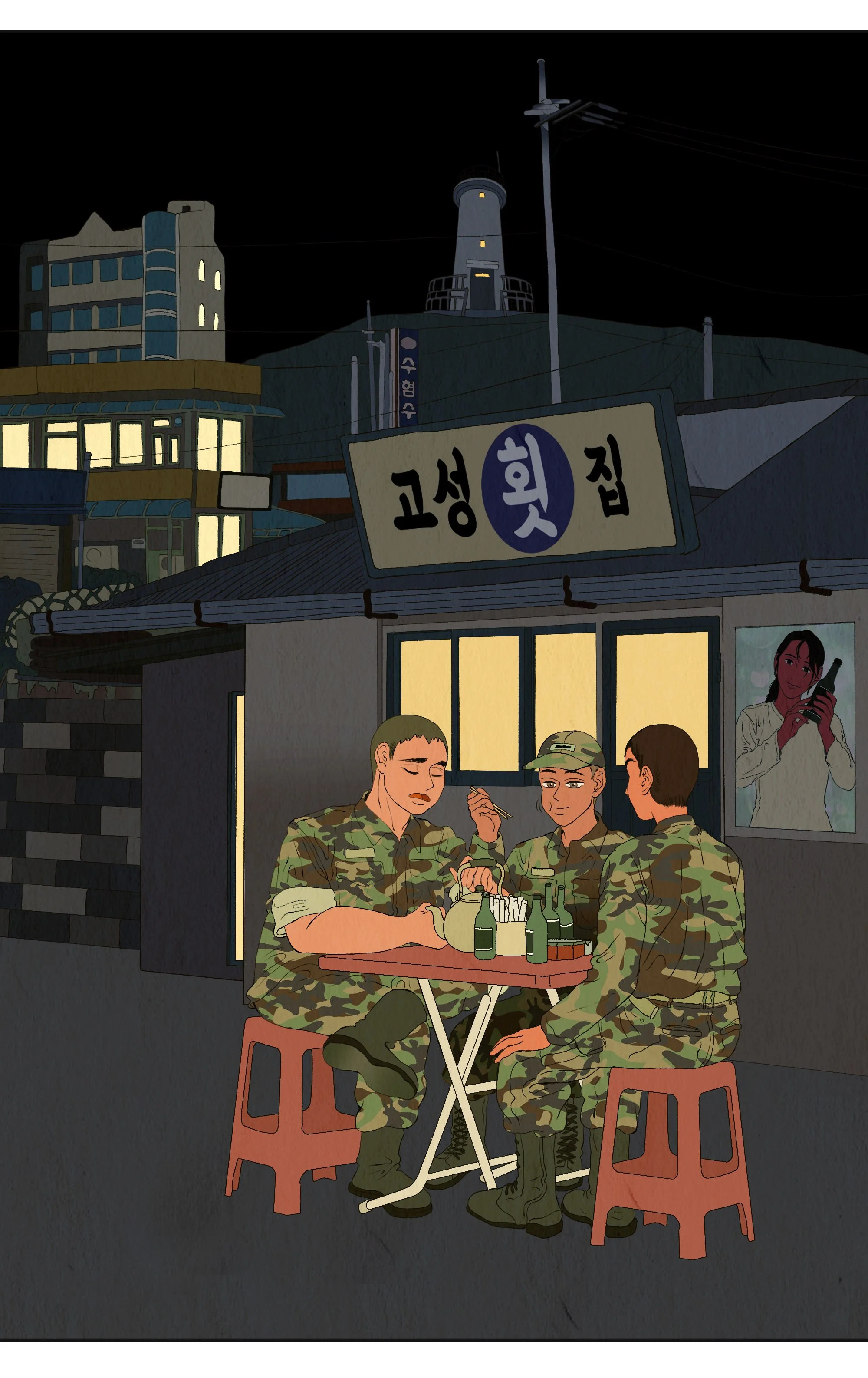
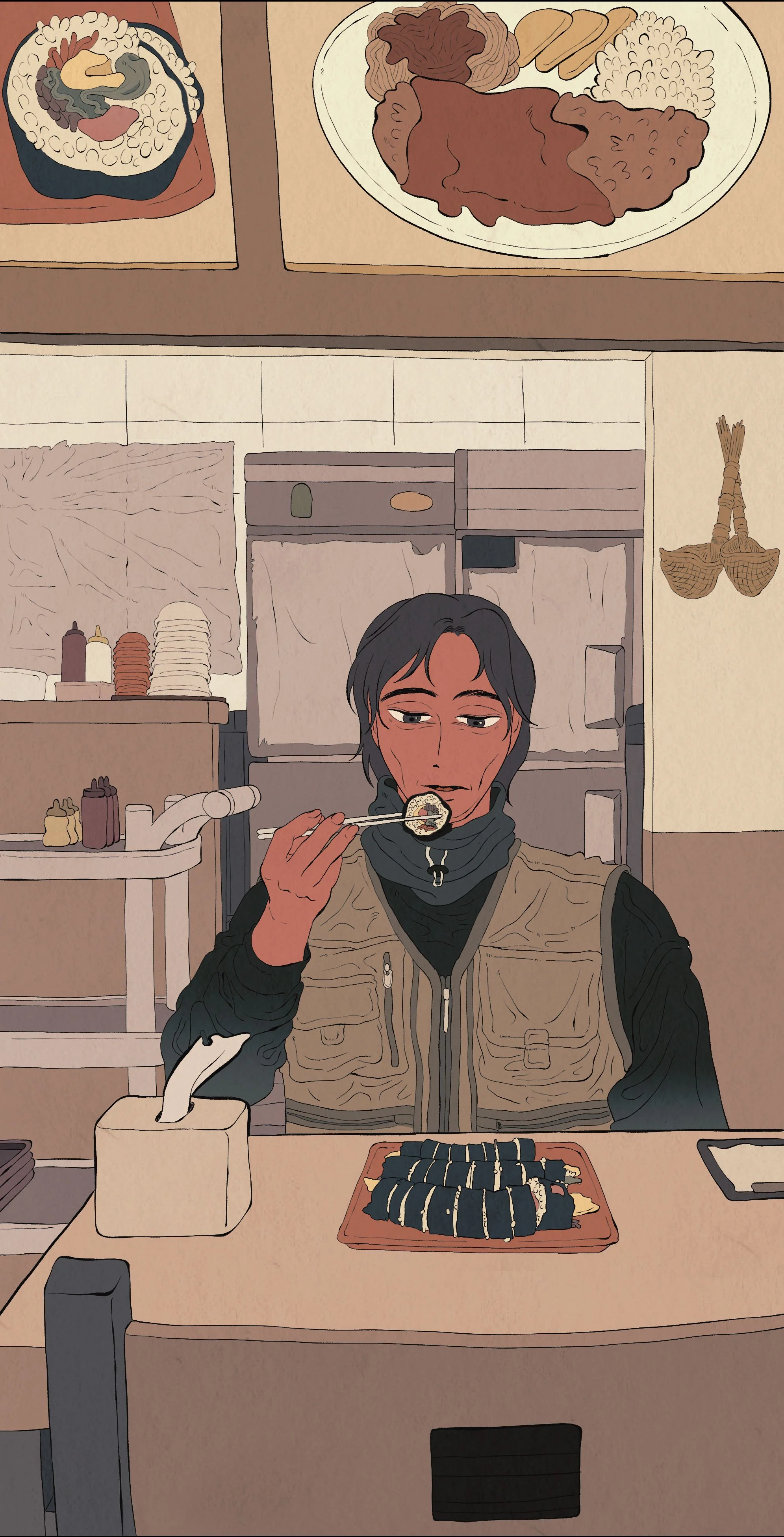
Illustrations: Jeon Nak-joo
3. The industrialization of food: He often drinks soju
The man in Jeon Nak-Joo's illustrations always drinks soju — both when something joyful happens and when life is hard. The soju in the green bottle that he drinks is today the alcoholic drink closest to Koreans' everyday life, and at the same time it's a clear example of the industrialization of Korean food culture.
Distilled drinks like soju first appear in Korean history in the late Goryeo period (918–1392) under the influence of the Yuan dynasty (1271–1368), and gradually took local root under the Joseon dynasty. The soju that Koreans drink today from green bottles differs fundamentally, however, from Joseon-era soju. Roughly speaking, traditional soju in the Joseon period was made by distilling fermented grains such as rice — in the same way as whisky — to obtain a spirit with an alcohol content of around 40–50%. Modern Korean soju, by contrast, is produced industrially by distilling cheaper raw materials several times to produce "neutral alcohol" with a purity of over 90%, which is then diluted with water. This production method, so-called "diluted soju," was first introduced from Japan during the Japanese colonial period as "modern soju" and began to be produced in large factories. After the liberation in 1945, diluted soju gained further ground, but the decisive turning point came with the South Korean government's policy from the 1960s onward. The state applied relatively low taxes to diluted soju and merged the producers, which paved the way for mass production based on cheap raw materials. As a result, soju overtook makgeolli (rice wine) and took over the position of "the national drink."
It's precisely here that the worker enters the scene. Diluted soju existed before the 1970s too, but in interplay with the rapid urbanization of that decade, it came to play a decisive role in the development of a distinct working-class culture. Among urban workers, new forms of social gathering arose, such as the drinking culture with colleagues (hoesik) and the culture around street kitchens and tent bars (pojangmacha), and at the centre stood almost always diluted soju. Diluted soju had a higher alcohol content than fermented drinks like makgeolli. To be able to endure the long military-dictatorship period, the regulated social mood, the killingly long working hours, and the intense competition of city life, makgeolli, with its roughly 6% alcohol, was simply not enough. On top of this, the rising meat consumption and the spread of heavily spiced dishes after the 1970s further increased soju's popularity. Like vodka, diluted soju doesn't have a marked aroma or flavour, and therefore goes particularly well with fatty and spicy food. For these reasons, soju became, for countless workers, the very synonym for alcohol. That soju — a product of the industrialization of Korean food — is constantly present in the illustrated man's everyday life is due precisely to this social background.
Illustrations: Jeon Nak-joo
4. The workers' K-food: across borders
One could choose to regard K-food as identical to Korean food. But if one broadens the concept to encompass the food culture enjoyed by Koreans who have left Korea (that is, the Korean diaspora), K-food need not necessarily be limited to Korea itself. Seen in that light, the Japanese dishes that the man in Jeon Nak-joo's illustrations encounters in Japan can also be called "the workers' K-food."
At the centre of cross-border K-food culture stands the Korean diaspora. Japan is the country where the diaspora was formed most actively in modern times. Before 1945, Korea and Japan were in a colonial relationship, and after Korea's liberation in 1945, many Koreans crossed the sea to Japan to build their livelihoods, often motivated by Japan's economic strength. The majority of the diaspora lived, and still live, as workers in Japanese society.
One food culture that has embedded itself deeply in Japanese everyday life because of the Korean diaspora is yakiniku. Although yakiniku is now, in some places, re-imported to Korea as a uniquely Japanese way of eating meat, no one can deny that the zainichi Koreans (Koreans resident in Japan) played a central role in its establishment. Many Japanese yakiniku restaurants actually sell Korean food alongside the meat. The word karubi (an important cut in yakiniku) also derives from the Korean word galbi.
Yakiniku culture has today become more diverse, but it still preserves the image also shown in Jeon Nak-joo's drawings: a place where workers gather to drink, eat meat, and laugh together in smoke-filled surroundings. Although the way of grilling meat has developed differently in Korea and Japan, the cultural code of sharing grilled meat among colleagues is preserved in both countries.
Another example of workers' food in Japan is the breakfast meal in cafés (kissaten) in Osaka: so-called Morning Sets. Known from Hiroshima in the 1950s, a Morning Set typically consists of coffee, toast, and a boiled egg. Here too, workers are behind the menu's origin: Japan, like Korea, was a country with long working hours, and the morning menu was created for workers who had to skip breakfast to get to work on time, so they could quickly fill their stomachs.
Morning Sets are found all over Japan, but are especially developed in western Japan. Osaka is particularly known for its Morning Sets; some cafés even offer rice and miso soup as part of the meal. I've also come across cafés in Osaka where you could get spaghetti or a sandwich as part of a Morning Set. Interestingly, there are many cafés in Osaka's Koreatown, where many zainichi Koreans live. As in other areas, Morning Sets are sold here, and many zainichi Koreans start the day with this meal. On that basis, it's hardly an exaggeration to call the Morning Set in a café in Osaka's Koreatown "K-food."
Illustrations: Jeon Nak-joo
5. What does he eat now that he's returned home?
In any case, the man in Jeon Nak-joo's strokes must, after surely many ups and downs, have returned to Korea and reunited with his family. Let's imagine for a moment: did he eat out with them, or did they have a home-cooked meal? I'm convinced he most certainly ate a home-cooked meal together with them.
The reason is that his frequent eating-out, as for most Korean workers, was probably not a choice he had freely made, but rather unavoidable and shaped by his structural circumstances. The aforementioned social factors led Korean workers into a world of restaurant visits and soju, and through this process the current food culture, known as "K-food," was formed.
Unfortunately, "jipbap" (home-cooked meals), which is the true root and foundation of Korean food culture, seems to be overshadowed by this. In this way, K-food in its current state stands in the shadow of Korea's rapid economic growth. I sincerely hope that the man in the drawings got a warm and delicious home-cooked meal with his mother, and I also hope that all Korean workers can be allowed to enjoy home-cooked meals more often and more conveniently in their lives.
Illustration: Jeon Nak-joo
References:
- 주영하 (Joo, Young-ha). 2011. 음식인문학: 음식으로 본 한국의 역사와 문화 (Food Humanities: Korean History and Culture through Food). 서울: 휴머니스트 (Humanist).
- 주영하 (Joo, Young-ha). 2013. 식탁 위의 한국사: 메뉴로 본 20세기 한국음식문화사 (Korean History on the Table: A History of 20th-Century Korean Food Culture through Menus). 서울: 휴머니스트 (Humanist).
- 주영하 (Joo, Young-ha). 2018. 한국인은 왜 이렇게 먹을까 (Why Do Koreans Eat Like This?). 서울: 휴머니스트 (Humanist).
- 島村恭則 (Shimamura, Takanori). 2003. "モーニングの都市民俗学 (The Urban Folklore of 'Morning')." 国立歴史民俗博物館研究報告 (Bulletin of the National Museum of Japanese History) 103, pp. 325-348.
- 한국민족문화대백과 (Encyclopedia of Korean Culture). n.d. https://encykorea.aks.ac.kr/(https://encykorea.aks.ac.kr/)
- 한국민속대백과 (Encyclopedia of Korean Folk Culture). n.d. https://folkency.nfm.go.kr/(https://folkency.nfm.go.kr/)
All ethnographic illustrations from this essay are made by artist Jeon Nak-joo.
You can discover more illustrations by Nak-joo here.