

“The Cycling Saxer... Leaves Seoul in the Dust”
(By Martin Petersen)
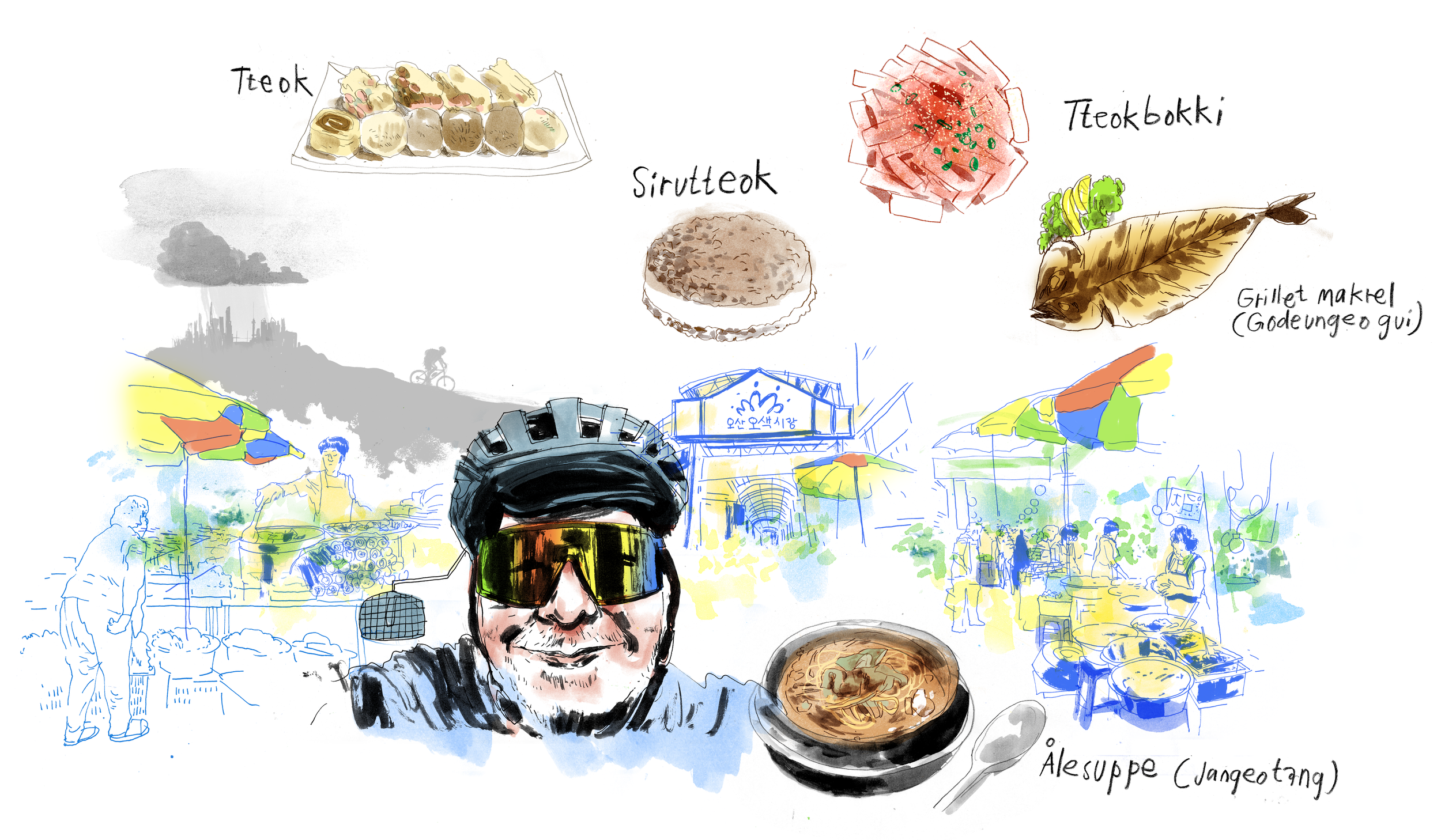
Carl “Calle” Jørgen Saxer is no taller than the Hyundai Department Store in Seoul! But he stands out in the streetscape just as much, here on the main street running from Shinchon metro station and the department store down to Yonsei University. He's Scandinavian, tall, solidly built, and energetically hunched forward in a call on his mobile. The plan was a stroll down memory lane to the restaurants and beer bars of this student district, which Calle first came to in the late 1980s. But a family matter means Calle doesn't have time for that kind of leisurely wander this evening. He's in palli, palli, palli mode. 'Quick, quick, quick.' A phrase you learn just as fast as 'thank you' and 'hello' here in Seoul.
After a palli, palli, palli scan of the surroundings, he finds the nearest Starbucks. There are more than 2,000 of them in South Korea. Calle gets a macchiato. It's not the day's first shot of caffeine. He looks around. "How many hours do you think they've been sitting here?" There are students everywhere in the café. In Seoul it's completely normal for young people to spend much of their study time in cafés. Most still live at home or in small sublet rooms, so a café is the best alternative to campus libraries and one's room. The selection of drinks is endless, and no one expects you to leave the place once you've finished your drink. "Just wait and see, they'll still be here when we go," he continues before we've had a chance to answer. Calle is a professor at the high-profile Hanyang University. The district with Seoul's highest concentration of students is, all things considered, probably not the ideal location for a nostalgic, intimate conversation about his nearly four decades in Seoul.
"I first came to Seoul in the summer holidays of 1989. It was the year after the Seoul Olympics, 1988. That's where I'd heard about Korea. I was living here in Shinchon and decided to walk into the city centre one day. It was scorching hot. I was sweating like a pig. I just had to have shade and something cold to drink." Starbucks with iced macchiatos on every street corner was still some years off. In the late 1980s coffee had arrived, but in powder form and without a hint of strength. "I spotted some buildings that looked like they'd have shade and something cold to drink. They turned out to be the Seodaemun Prison museum. The prison was built by the Japanese during the colonial period (1910–1945) and tells the story of that era. I knew nothing about Korea's history at the time, but my interest was sparked here. It wasn't only my experience at the Seodaemun Prison museum that summer day in 1989 that gave me a real interest in South Korea, but also the fact that the country had only recently (1987) become a democracy. As a Japanese colony, the country and its people had been massively abused, and just a few years after Japan was finally defeated came the Korean War (1950–1953) with tremendous destruction. And not only would South Korea achieve a considerable improvement in living standards over the following decades — what's known as the Miracle on the Han River — but the country also went from being an authoritarian state to a democracy in the later 1980s. It was how this had been achieved that was very interesting to me." Here, 36 years later, it's essentially the same question that fuels Calle's teaching and research. Calle took to the streets during and after the martial law in those days in December 2024, when it seemed to balance on a knife's edge whether South Korea was heading toward authoritarian rule or would remain democratic. Heading right or left. But he wasn't there to support the opposition, the 1980s student activists and the younger generation of progressives. Nor was he there in sympathy with the president's conservative supporters, who believed he was fighting to save South Korea from a left-wing plot. Calle was there to observe the political event and interview the participants.
It was far from the first time Calle took on that role in Seoul's streets. As an exchange student in the early 1990s, he was an observer to one student demonstration after another, but he finds that university students today, and the universities they're educated at, increasingly focus on quick and efficient career orientation. And that young people often have a weaker sense of belonging to the university and their fellow students. Everyone is deeply buried in their mobile phones. To a large extent this is the story of South Korea having experienced dramatic economic growth, the consolidation of democracy, and great international recognition for its music, film, literature, and TV series. But Calle is a little worried that the country he's spent the majority of his adult life in has become so rich, democratic, and internationally recognized, while young people at the same time seem to have lost interest in the political — whether right or left, progressive or conservative. For Calle it's less about direction than about engagement.
THE FIVE-COLOUR MARKET
Calle looks at his watch. He has to move on now. Palli, palli, palli. Duty calls. We're in the worst of rush hour. This is when Seoul's drivers need all their patience, and people take a deep breath before boarding the metros and buses. I jokingly ask Calle if he cycles home. He is a bit of a Dane, after all. Calle's eyes light up in competition with the neon lights flashing out in the evening-dark street.
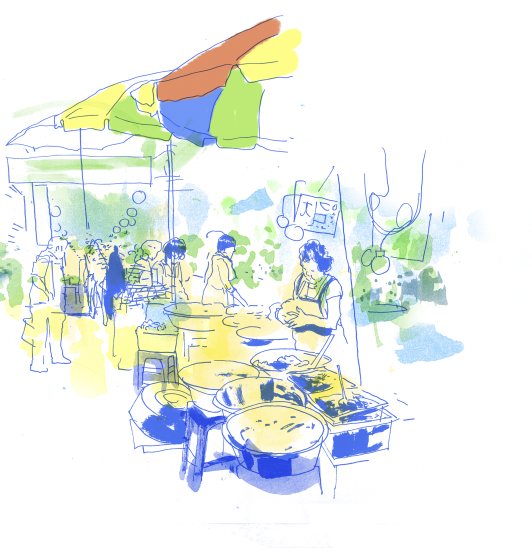
"These days I cycle just over 10,000 km a year, and I much prefer the rural areas to the cities." He pauses briefly, and now his eyes shine in competition with the façade of the Hyundai Department Store. "One Sunday I was out cycling on the roads outside Dongtan, where I live. On the way, completely by chance, I passed a market outside Osan; Osaek-sijang, it's called — the Five-Colour Market." Osaek means 'five colours' and refers to the five elements (wood, fire, earth, metal, water) and their associated colours: blue, red, yellow, white, and black. The five 'base colours' recur in everything from cooking and clothing to architecture and religious rituals.
"I just wandered around the market for a good five hours. My family called and texted to find out where on earth I'd got to and whether something had happened to me. When they figured out where I was, they sent me a shopping list of things they wanted me to bring home from the market… And yes, one of the reasons I like these more traditional markets is that it feels a bit like going back in time. I have to admit I like this kind of market more than Emart and the other modern big supermarkets."
CALLE'S FOOD RECOMMENDATIONS FOR THE FIVE-COLOUR MARKET
Tteok
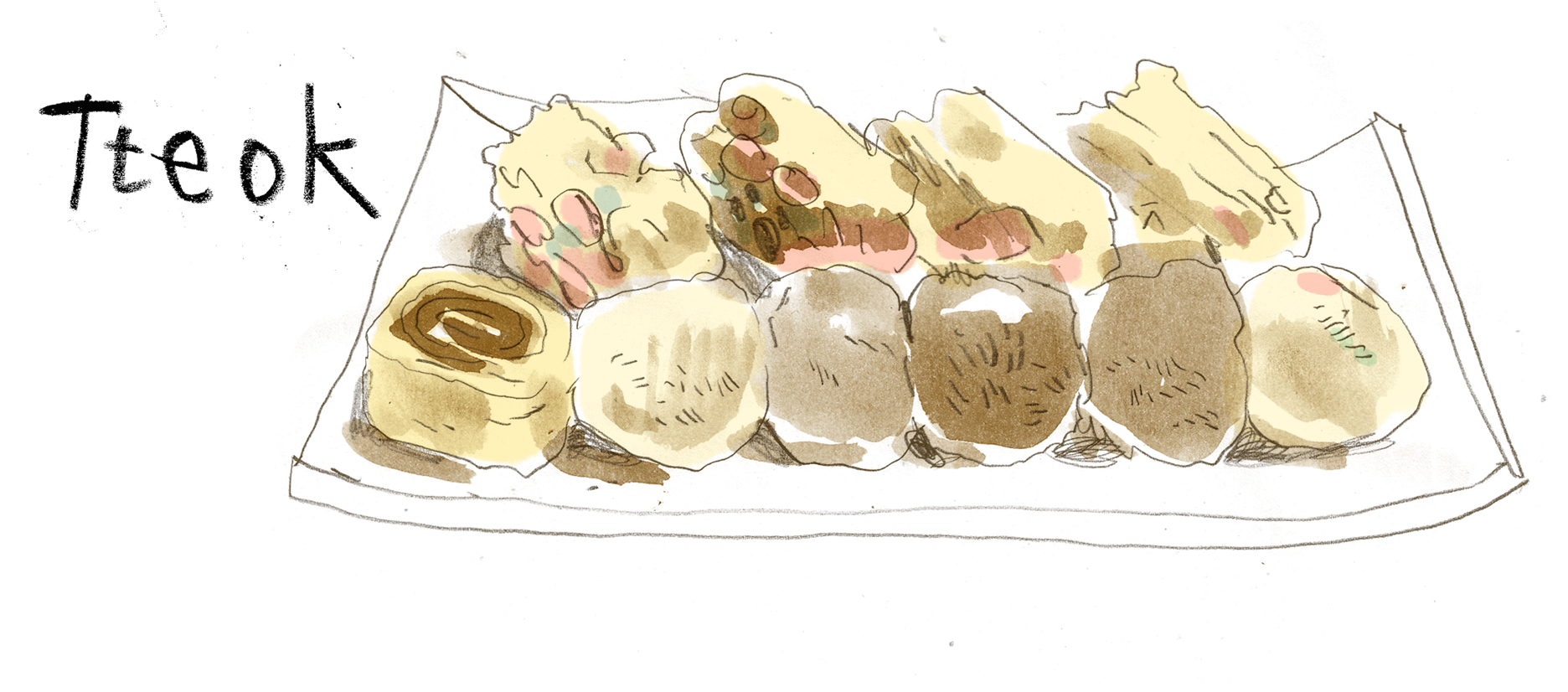
"One of the things I always buy is rice cake (떡, tteok), especially sirutteok (시루떡) and tteokbokki (떡볶이)." Tteok is the Korean term for rice cakes, made from steamed, ground, or pounded rice, often used at celebrations, holidays, and as a gift. The texture is chewy and soft, and the flavour ranges from sweet to neutral. At the Five-Colour Market, small stalls offer freshly made rice cakes packed in clear plastic trays or wrapped in paper. Here Calle might get a mixed tray, chosen by season and on the recommendation of the older lady behind the counter.
Sirutteok
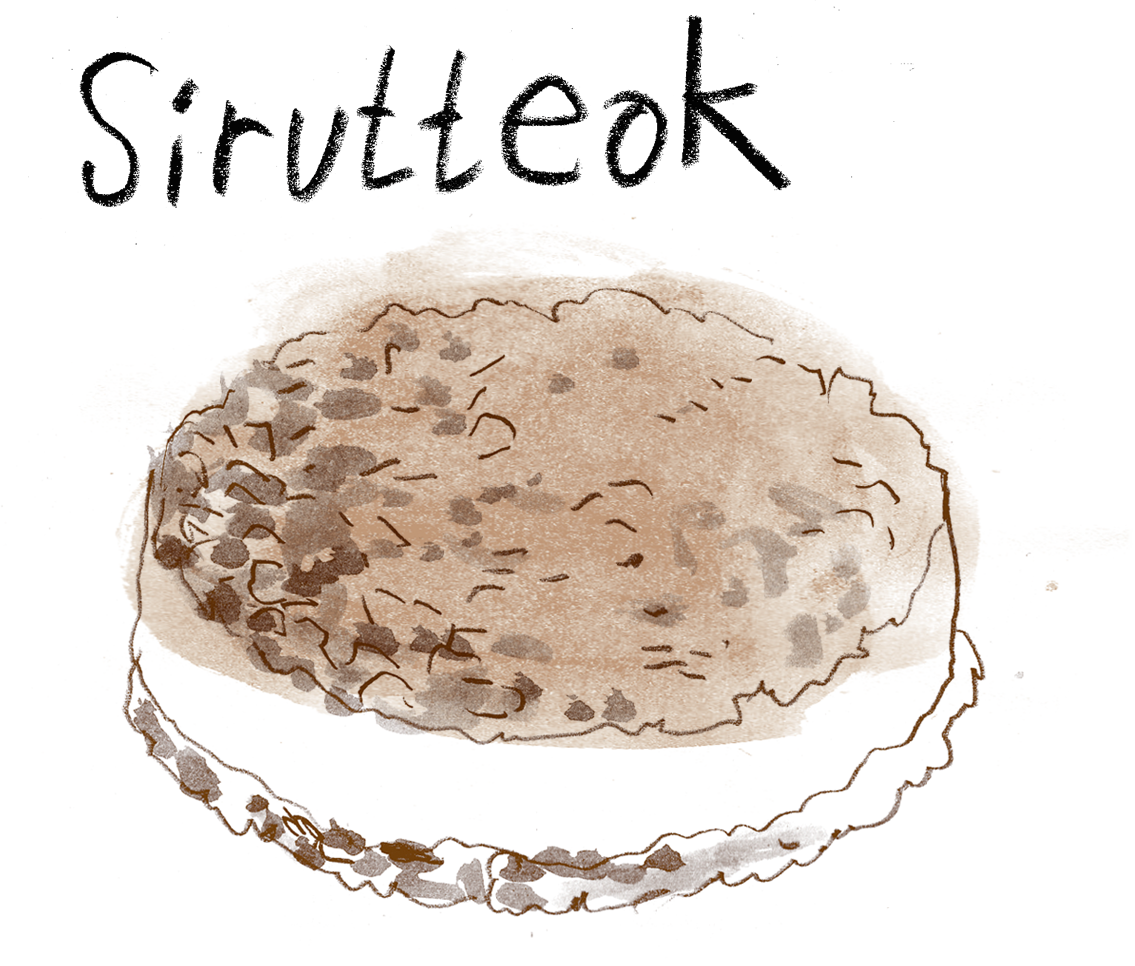
Sirutteok is a traditional steamed rice cake made in a large clay or bamboo mould (siru) — often layered with red beans, which symbolize luck and protection. At the markets, Calle finds it as large, cut pieces, sometimes garnished with dried dates or chestnuts. It has a faint aroma of steamed rice and sweet beans.
Tteokbokki
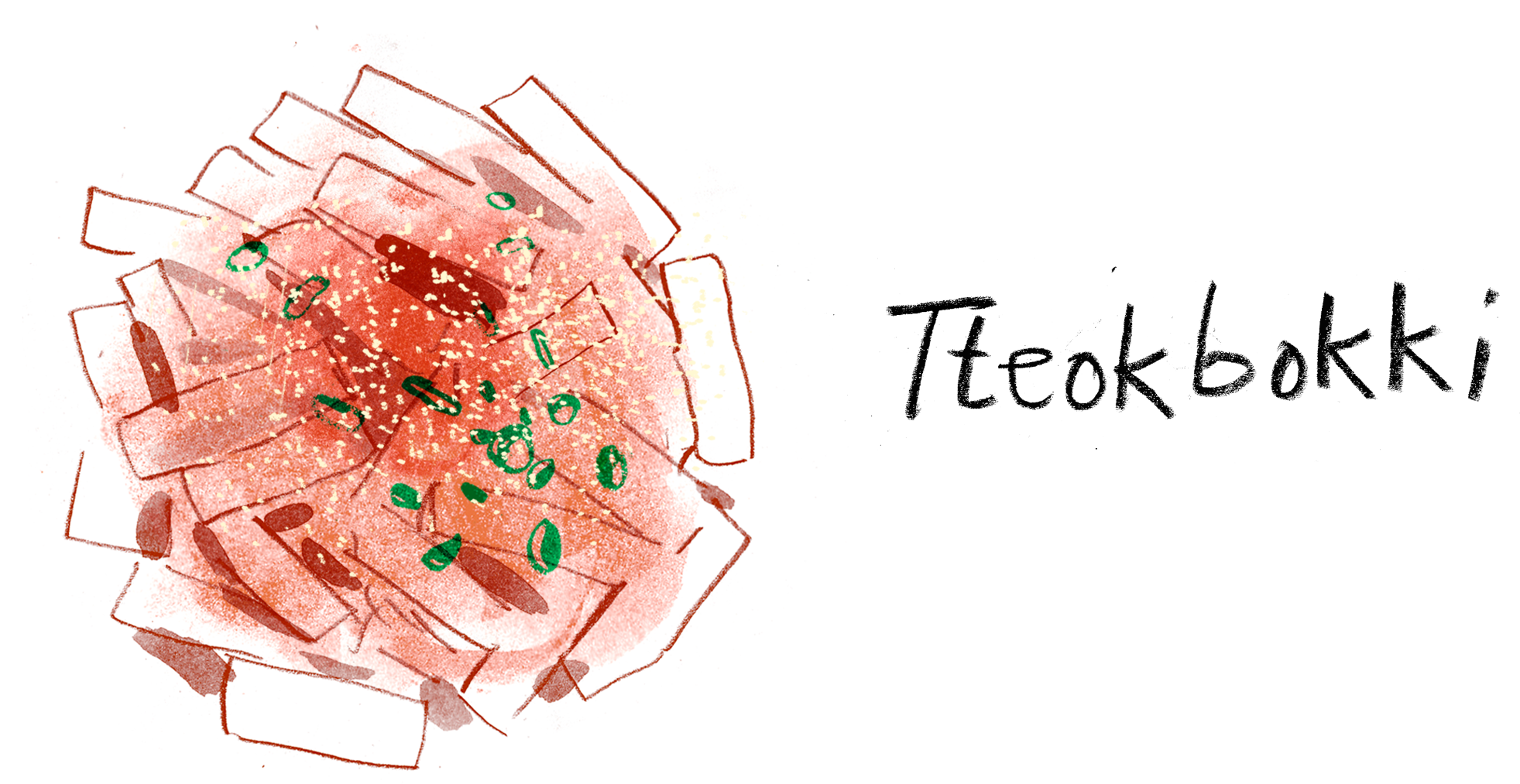
Tteokbokki is a popular street food consisting of chewy rice cakes in a spicy sauce with gochujang (chili paste), sugar, and soy sauce. Calle often buys it from the market's outdoor stalls, where steam rises from large metal pans and the sauce slowly thickens around the rice cakes. It's a quick, hot snack that both fills you up and burns on the tongue.
CALLE'S FOOD RECOMMENDATIONS FOR RESTAURANTS IN THE RURAL AREAS OUTSIDE SEOUL
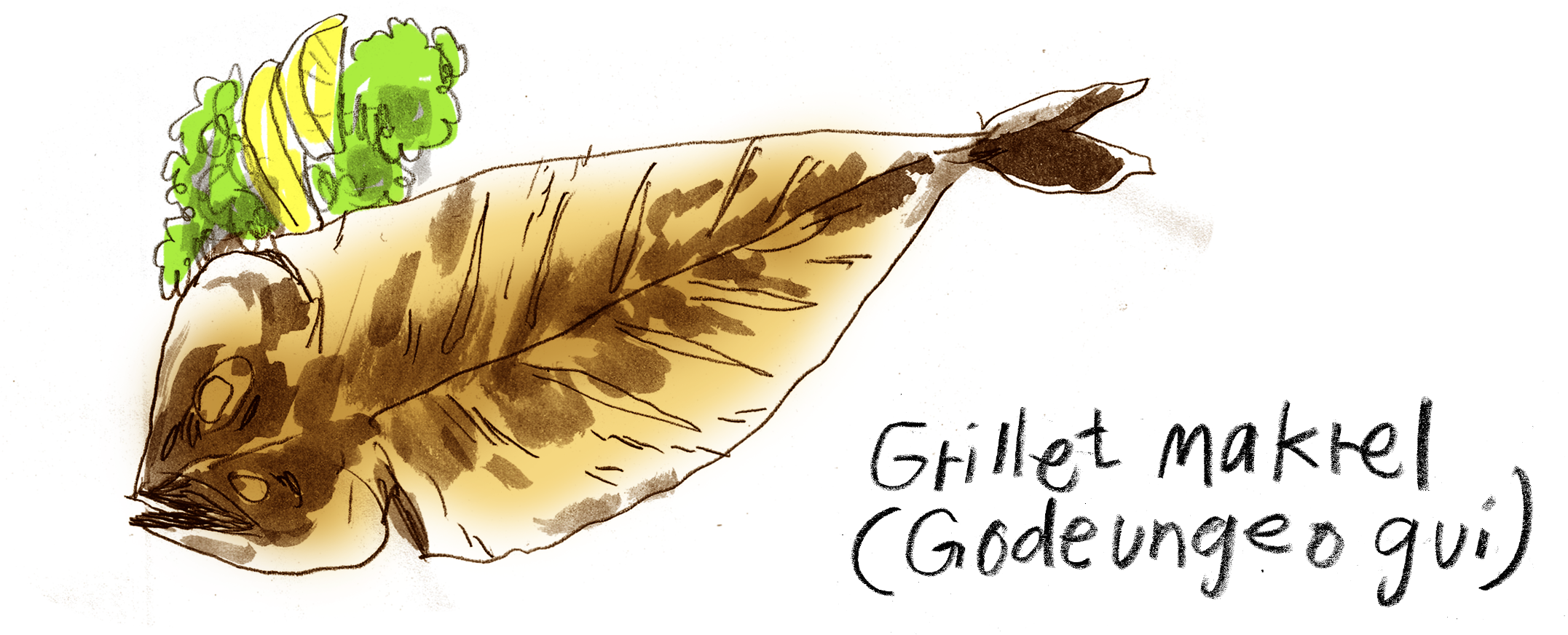
Grilled mackerel (고등어구이, godeungeo gui)
The mackerel is lightly salted or marinated in soy sauce and grilled crisp on the outside while the flesh stays juicy. It's often served as a main course with rice, kimchi, and various banchan (small side dishes). It's one of the most beloved everyday dishes in South Korea. It's often associated with home cooking and simple meals that mothers or grandmothers make for the family, but it's also found at traditional rural eateries (baekban-jip) that Calle passes on his cycling trips.
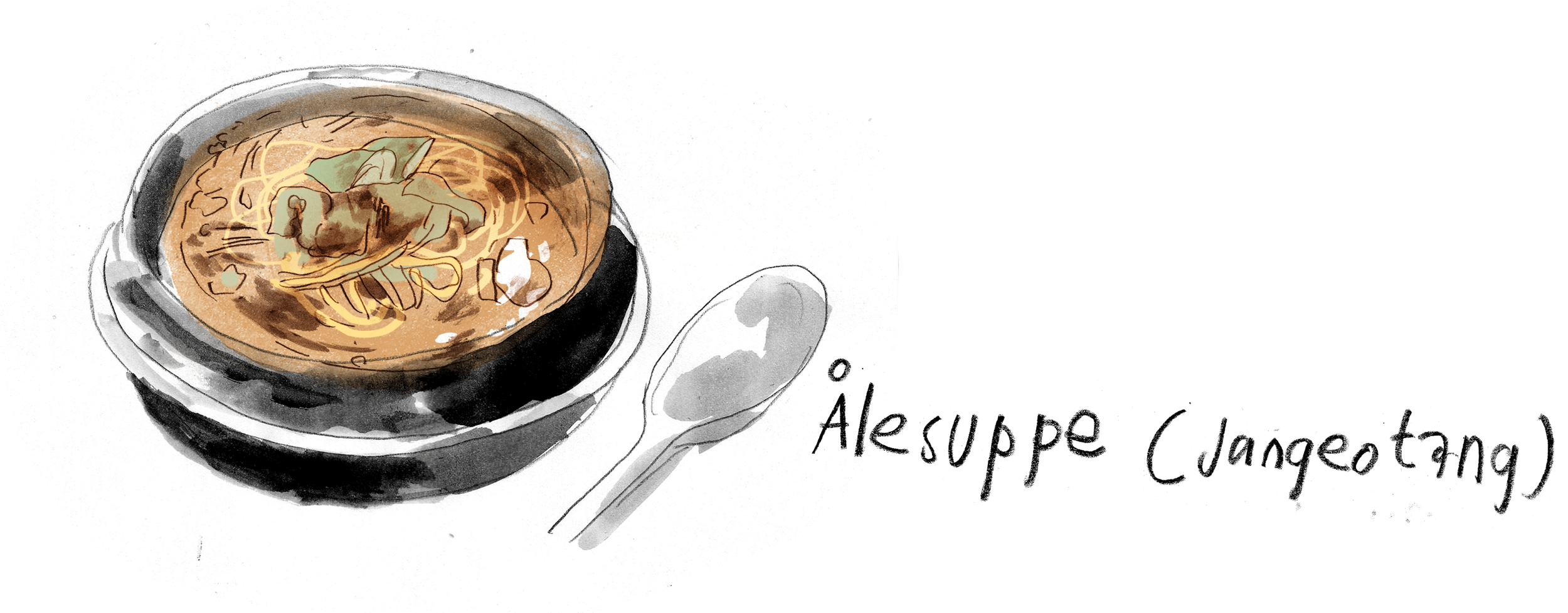
Eel soup (장어탕, jangeo tang)
Eel soup is a rich, hot, and spicy soup traditionally eaten to regain energy and strength, especially in the hot summer months. The dish belongs to the type of food Koreans call boyangsik — restorative, strength-giving food. Calle often eats eel soup during long cycling trips, where the hot, spicy soup helps him keep his steam up on the bike.
CALLE'S CYCLING RECOMMENDATIONS
"When it comes to cycling in South Korea, I highly recommend not only cycling along the Han River (which is lovely), but also the route from Seoul to Busan, which is a good 600 km. It's quite simply a fantastic experience. The east coast also has a beautiful route along the beach from the city of Sokcho in the north to the city of Ulsan in the south."
Alle illustrations on this page are by Rasmus Meisler. See more of his work here.