

“Reunification Begins at the Dining Table”
(By Martin Petersen)
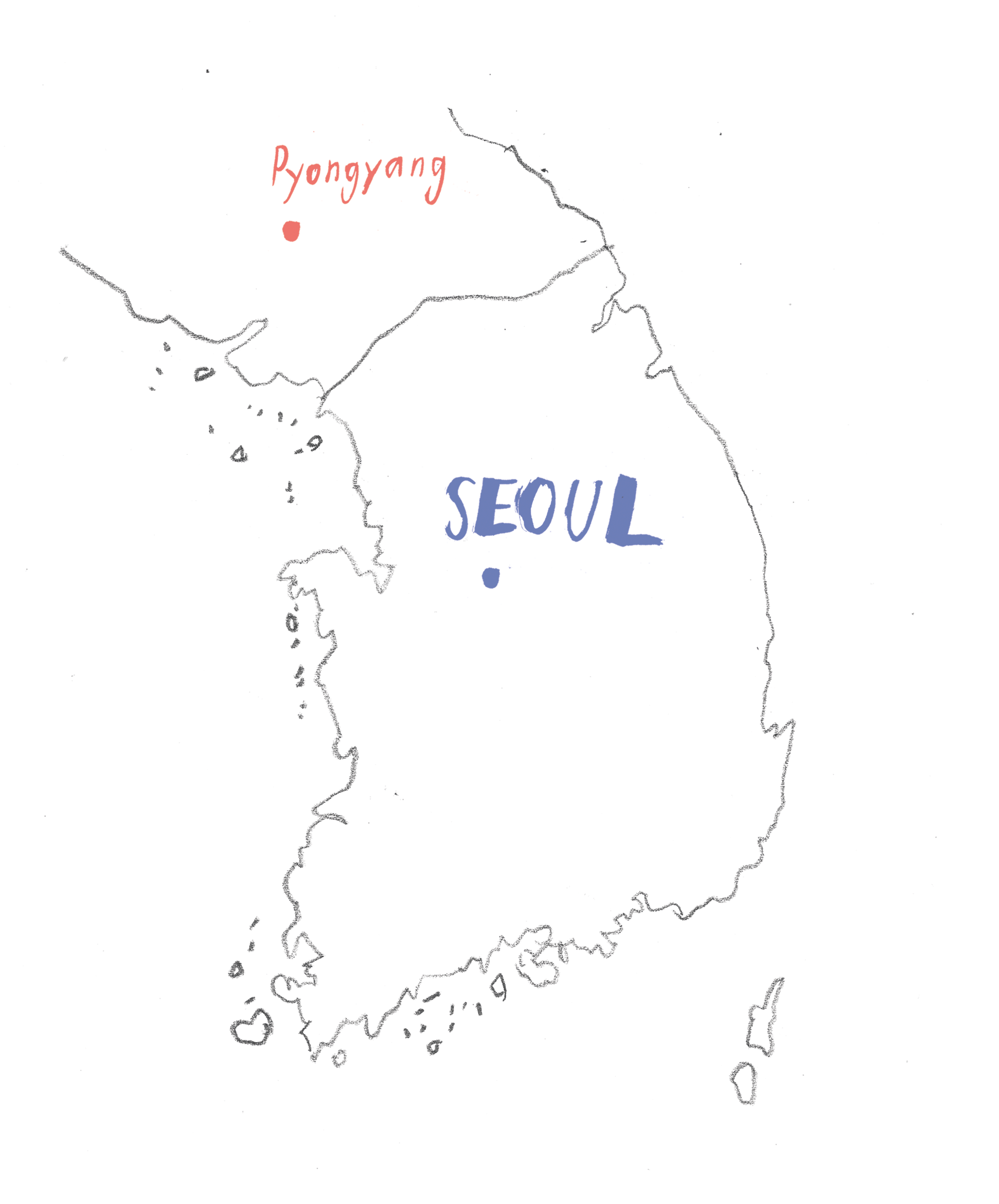
In the heart of the city, at the Seoul Museum of History, you can take in the breathless story of South Korea and its capital. Over the past hundred years, Korea has gone from being occupied by Japan (1910–1945), ravaged by a terrible civil war with great-power intervention (1950–1953), and divided into a North and a South along the 38th parallel (the DMZ, the demilitarized zone). The country to the South began the postwar era as a poor developing nation, with the USA as its backer and inspiration; from the 1960s onward it floored the accelerator on economic growth and a swelling middle class, though with a democratic deficit. With the 1988 Seoul Olympics as the pivot point, the country added high-speed democratization to its continued growth, and today it is a global hub for film, music, TV series, celebrities, the beauty industry AND FOOD. Seoul is the place for all of it.
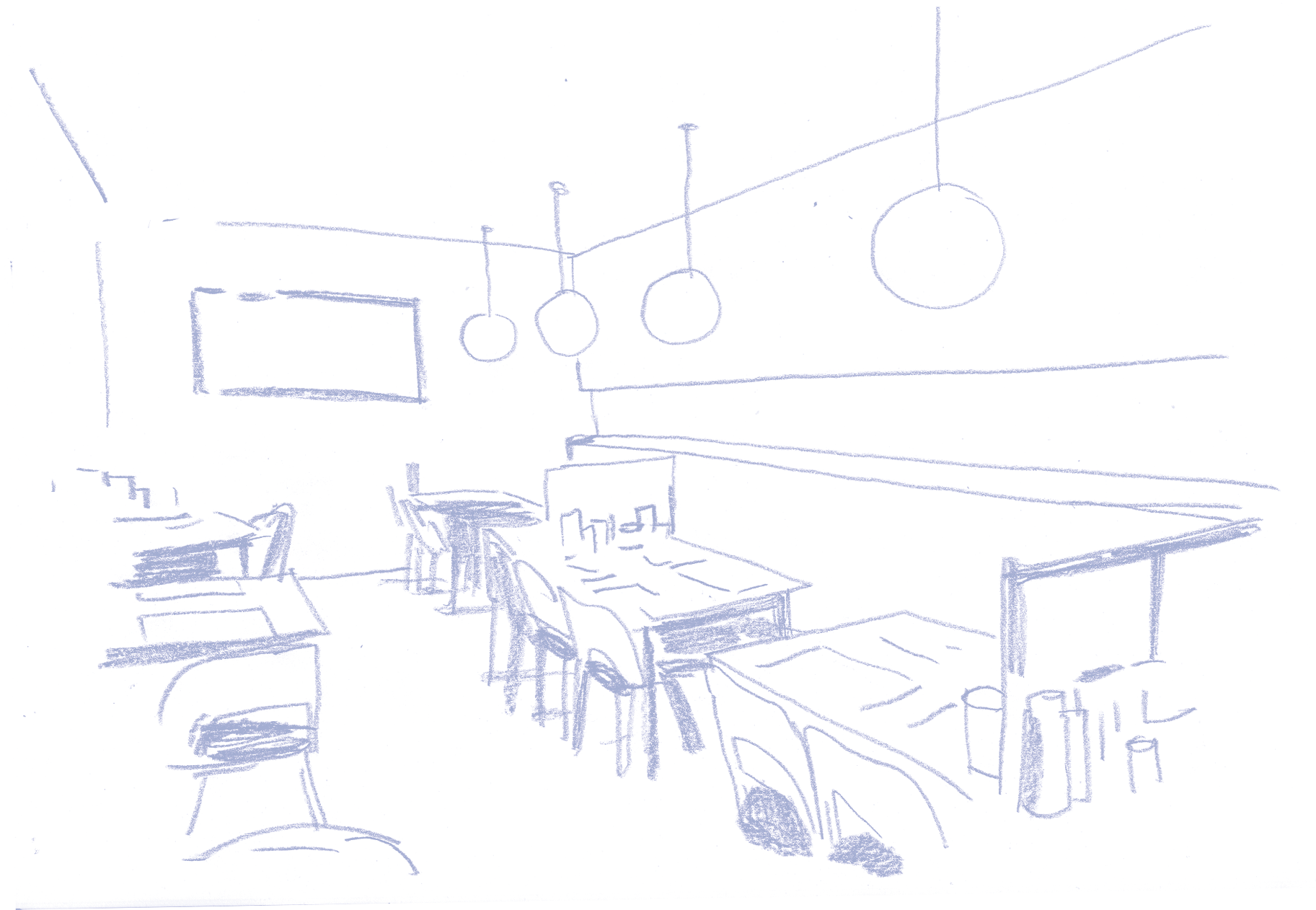
Across from the city history museum rises a skyscraper. It looks like thousands of other skyscrapers here in the city centre, packed from basement to attic with corporate offices. Down in the basement level are the kind of restaurants business people visit at lunch. Among them is a very particular one: Neungra Bapsang (능라밥상). Here we meet Ae Ran Lee, who has recently opened this, her second restaurant. Ae Ran is busy with her restaurants and activities, but she sits down and shares her story.
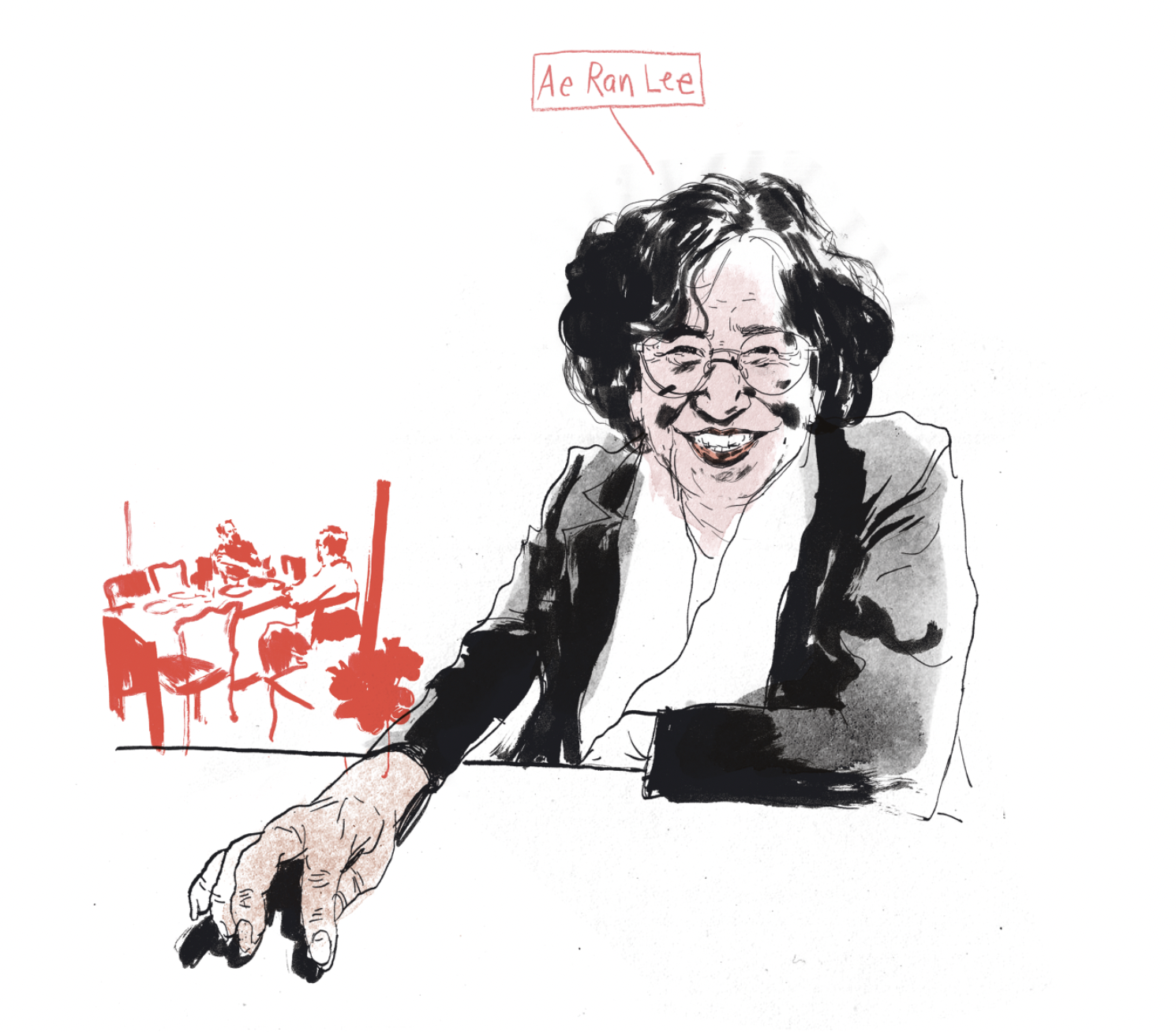
Ae Ran was born about 200 km from here — but in an entirely different world: in North Korea's capital, Pyongyang. At the age of ten, she and her family were forcibly relocated to the rugged mountains of Ryanggang Province, up north by the border with China, as punishment for her family background; her grandparents had fled to South Korea during the Korean War.
The 1990s became a nightmarish decade for them. In 1997 they managed to escape the country and reach its neighbour to the south. There, in 2009, Ae Ran earned a PhD in Food and Nutrition, and since the turn of the millennium she has run restaurants serving North Korean food in Seoul. The dishes on the menu are from Pyongyang. We choose: Pyongyang Naengmyeon (평양냉면), Pyongyang Onban (평양온반), and Chapsal Sundae (찹쌀순대).
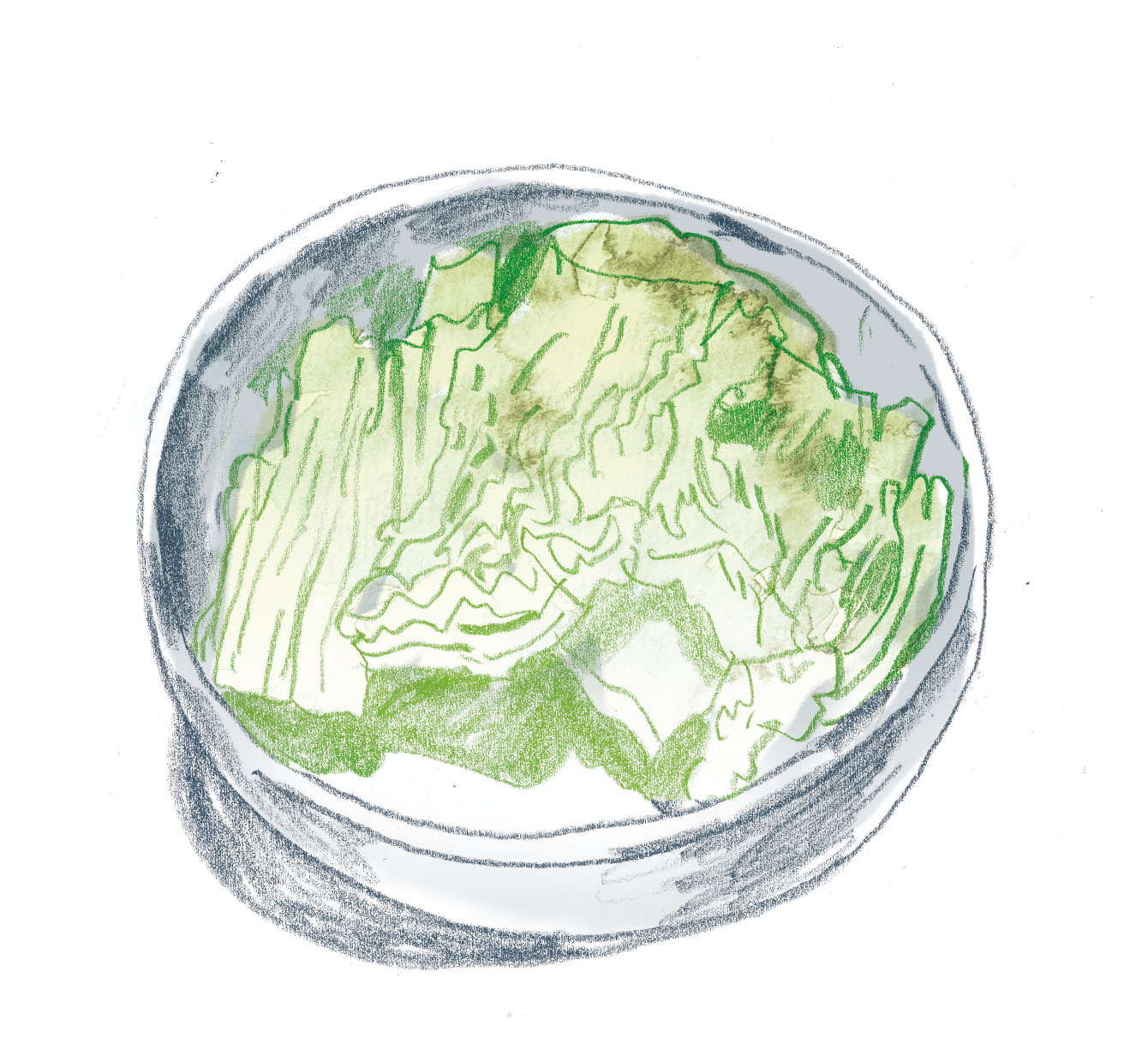
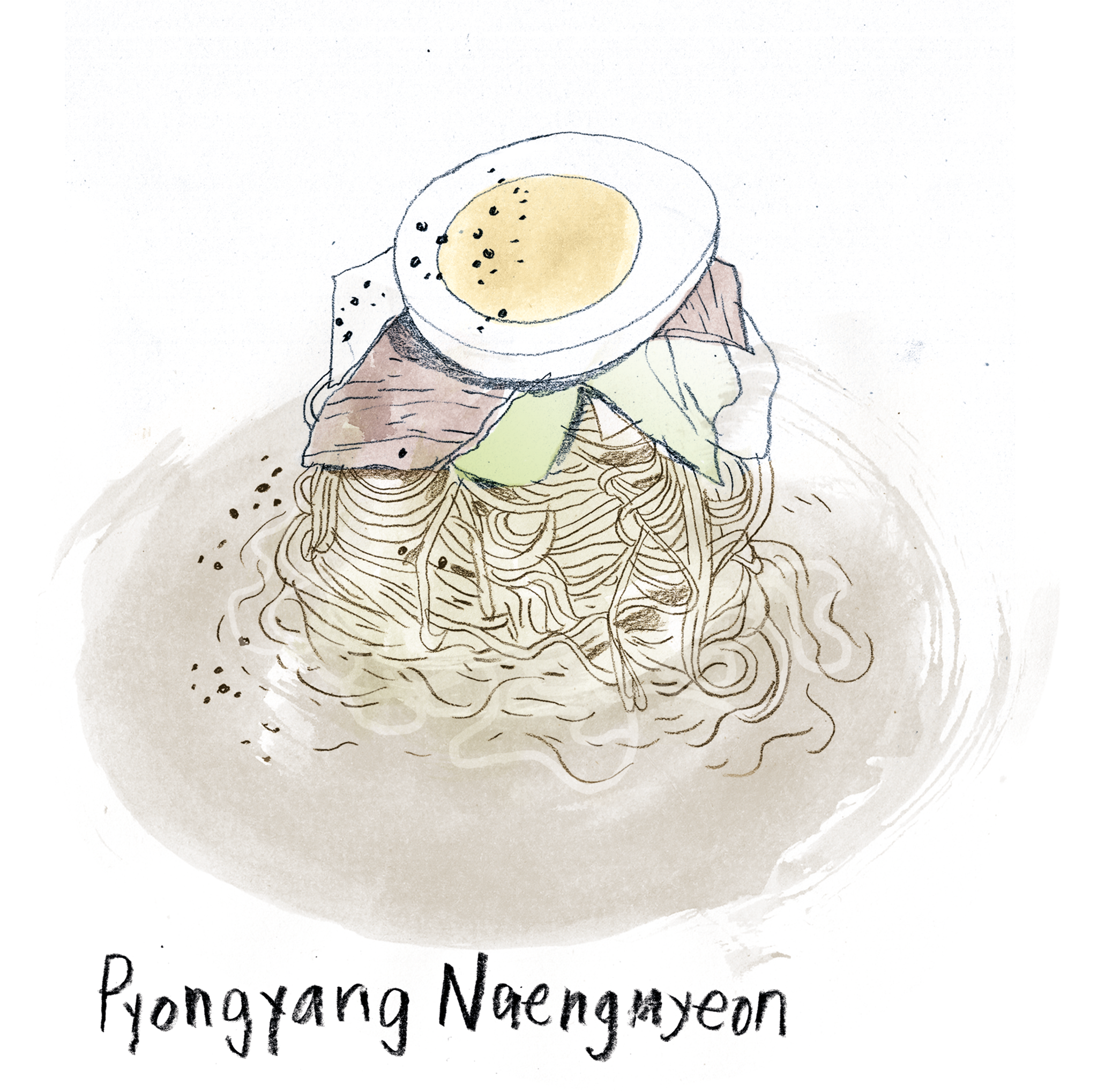
For readers familiar with Korean cuisine, the delightfully spiced, tangy-fresh kimchi (김치) is probably the first thing that comes to mind. Kimchi is the umbrella term for fermented vegetables — for example, based on napa cabbage or radish, and seasoned with chili, garlic, ginger, and fish sauce. It's virtually impossible to get through a day in Seoul without encountering kimchi — either as banchan (반찬, the side dishes served alongside rice and the main course) or in a stew (jjigae, 찌개). The kimchi we're served first at Neungra Bapsang is a good deal milder than what I'm used to from South Korean cuisine. It's a radish kimchi (kkakdugi, 깍두기) and a white kimchi (baek-kimchi, 백김치), which is a traditional Pyongyang speciality. Soon after, the first main course arrives: Pyongyang Naengmyeon. It's a classic from the North Korean capital's cuisine — and probably the dish easiest to find in Seoul's North Korean–inspired restaurants. Pyongyang Naengmyeon is cold buckwheat noodles (based on about 40% buckwheat). The noodles, made by hand at the restaurant, are served in a clear beef-stock broth and pickled-radish water.

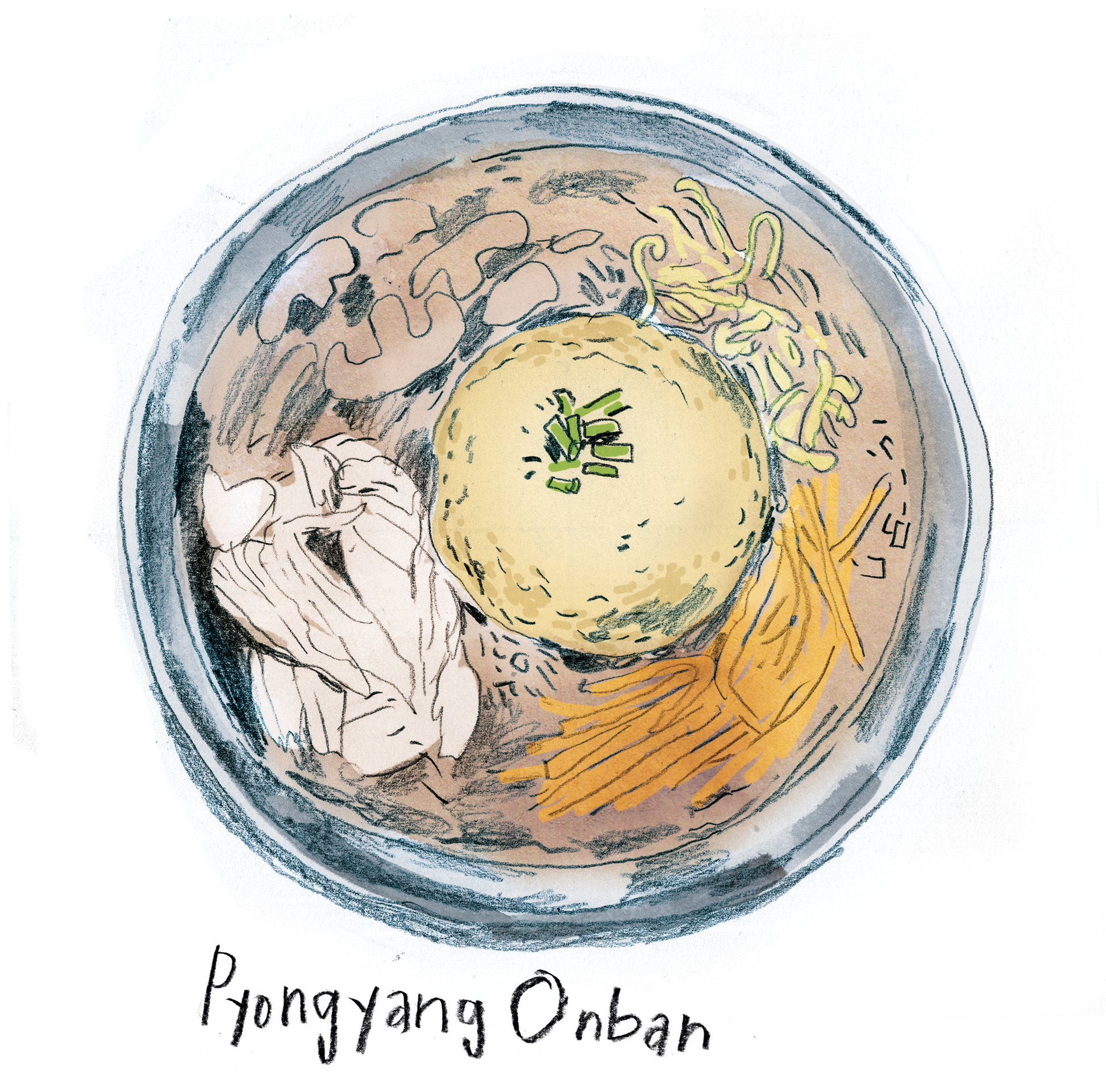
The next dish to arrive is Pyongyang Onban. It's a warm rice dish served in a clear chicken broth with boiled chicken, mung bean pancake, bean sprouts, and mushrooms. Ae Ran tells us she chose this dish for her menu as an example of the festive food she ate in her childhood in Pyongyang, and which she also found among her mother's recipes.
In North Korea, Pyongyang Onban is served at weddings, for instance. Few people, most likely, associate Pyongyang and North Korea with festive food. And Ae Ran's restaurant is in no way a tribute to the North Korean regime. A quick search online also shows that she is probably more closely aligned with the conservative wing in South Korea — the one more uncompromising in its focus on regime change and human rights — compared with the progressive wing, which has traditionally placed more emphasis on dialogue and rapprochement with the country to the North.
If Ae Ran is an ambassador for North Korean food, she is one in a different way. In the newly published book 'One Meal, One Memory: The Taste of Survival in North Korean Cuisine' (2025), she writes about deprivation, hunger, family bonds, and regional dishes. Food is, all at once, a thread to both deeply traumatic and warm memories. You might say that Pyongyang Naengmyeon and Pyongyang Onban are food from her mother's recipe books that Ae Ran wishes everyone in North Korea had the chance to eat.
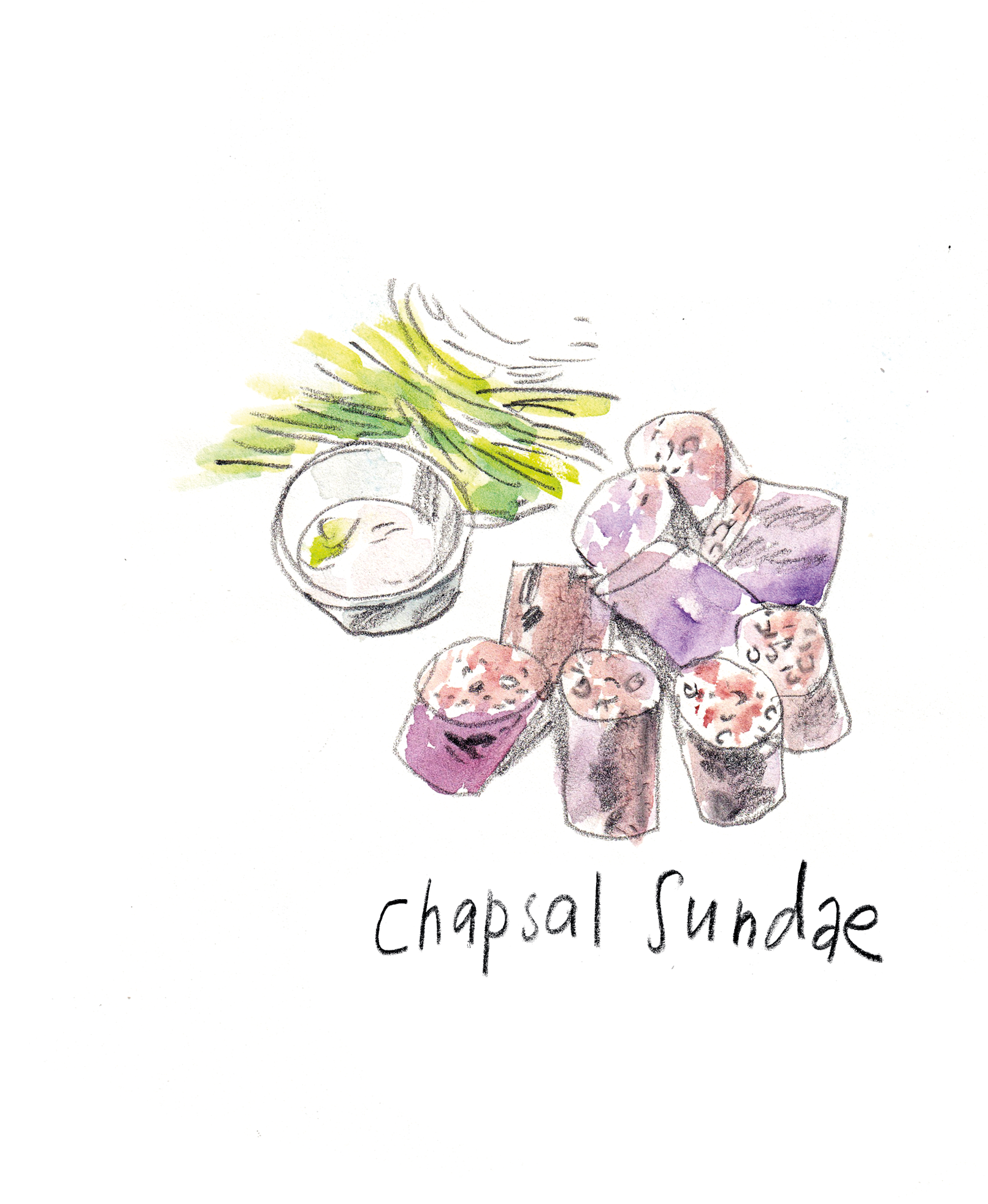
But Ae Ran's ambitions go beyond sharing these memories with those of us who visit her restaurants in Seoul. She also wants to serve dishes that every South Korean knows inside out, but with something new added to the taste. The third dish to arrive tells exactly that story. It's a Chapsal Sundae (찹쌀순대, blood sausage with glutinous rice). The taste differs clearly from the mass-produced sundae you can find at market restaurants and street stalls in Seoul, among other places. Sundae originally comes from North Korea, and Ae Ran's version is made to a North Korean recipe — with glutinous rice as the main ingredient. To this style of blood sausage, Ae Ran has then added inspiration from the Spanish and Portuguese chorizo (chouriço) she has tried on her travels there.
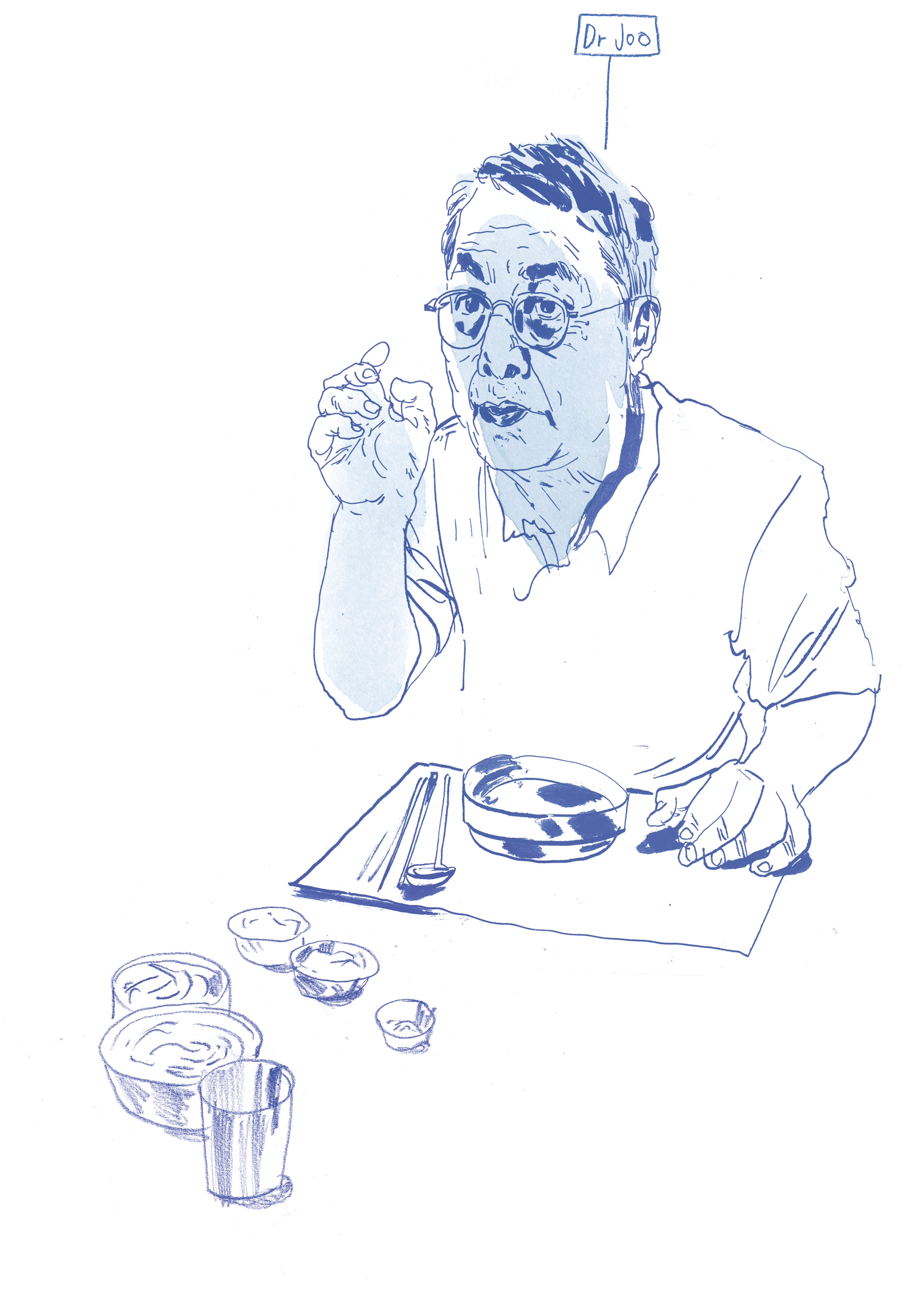
Respect for history and diversity, and it's no exaggeration to say that everything in Seoul is in constant motion. That applies to the traditional dishes of Korean cuisine, too. The food anthropologist Professor Joo Youngha of the Academy of Korean Studies, who eats cold noodles, warm rice, and Korean chorizo with us at Neungra Bapsang, stresses diversity as he gives us the overview of North Korean food in Seoul. Because North Korean food in Seoul isn't just food from North Korea. A serious culinary voyage of discovery in Seoul must include at least four kinds of North Korean cuisine, cuisines that tell the story of the flows of people from North to South:
First came the — often wealthy — families who fled North Korea after the Soviet Union set the country on a socialist course in the tumultuous period following Japan's surrender in 1945. The end of the Japanese occupation gave way to an ideological rift, which meant that many wealthy landowners and industrialists in the North left, if not fled, to the American-dominated South. They settled in and around the Eulji-ro and Toegye-ro streets in central Seoul, where restaurants serving North Korean food have stood ever since.
At the start of the Korean War (1950–1953), hundreds of thousands of people fled south. After the war ended, some of them settled at the foot of the northern side of Namsan mountain, in the areas around Myeong-dong, Toegye-ro, and Eulji-ro, where the Japanese — the former colonial power — had mainly lived. They bought the empty houses cheaply from the American military government. That's why there are still many restaurants in this area serving food in the pre-1950 North Korean style.

Today these two 'generations' of North Koreans are of course fully South Korean citizens, but some keep a connection — if not to the country in the North, then to their family history. Youngha's father-in-law fled to Seoul during the Korean War. Youngha takes part every year in association gatherings for people and descendants who have their roots in the other Korea, just north of the border. This is also Youngha's personal way into decades of studying North Korean food and food culture.
Since the war ended in 1953 — and especially since the 1990s — thousands of North Koreans have fled North Korea for political and economic reasons. Many have chosen South Korea and the capital, Seoul, as their new home. The third North Korean cuisine is created by people who, like Ae Ran, originally come from Pyongyang. But the great majority of recent decades' North Korean refugees come from the poor, isolated Hamgyeong Province, bordering China. Many of these people have never set foot in the capital, Pyongyang, by the time they arrive in South Korea, and for many, in Seoul. These refugees from the North spend their first period at Hanawon (the state reception centre) before being integrated into society. There they receive instruction about South Korea, learn about their duties and rights, and about what it means to be a citizen of a free, democratic country. As we eat Pyongyang Naengmyeon, Youngha tells us that in 2015 he and his wife hosted two North Korean women from Hanawon for a kind of homestay for a couple of days.
They invited the two women out to eat cold Pyongyang noodles at a restaurant run by a person who had fled south during the Korean War from the port city of Nampo near Pyongyang. To Youngha's great surprise, the two North Korean refugees didn't even finish half the noodle dish. He couldn't bring himself to ask the women why, and lay awake — until it hit him like lightning at daybreak. The two women from the poor, isolated Hamgyeong Province had never once tasted the North Korean capital's noodles and mild kimchi. It stirred no memories in them. Neither good nor sorrowful. Nothing. So the next day he invited them to eat Hamheung-style naengmyeon, inspired by the cuisine of the Hamgyeong region — a robust dish with plenty of chili, an intense broth, and 'dense' noodles made from potato starch. The women ate the dish before Youngha could blink.
People from Pyeongan Province, where Pyongyang lies, are fond of dishes like Pyongyang naengmyeon (cold buckwheat noodles) and bulgogi (marinated, grilled beef). People from Hamgyeong Province, where Hamheung lies, prefer Hamheung naengmyeon — cold noodles made from potato starch tossed with a spicy chili dressing — as well as gajami sikhae, a fermented dish made from raw flounder, millet, radish, and chili powder.
Cold noodles aren't just cold noodles. North Korean food in Seoul isn't just North Korean food in Seoul. And the story of what North Korea means here in South Korea's capital we've covered only a small sliver of, here in the middle of one of Seoul's central business districts, at Ae Ran's newly opened restaurant serving dishes from her mother's recipe book.
All illustrations on this page are by Rasmus Meisler. See more of his work here.