

“Pasta & Tear-Gas-Hangover Instant Noodles”
(By Martin Petersen)
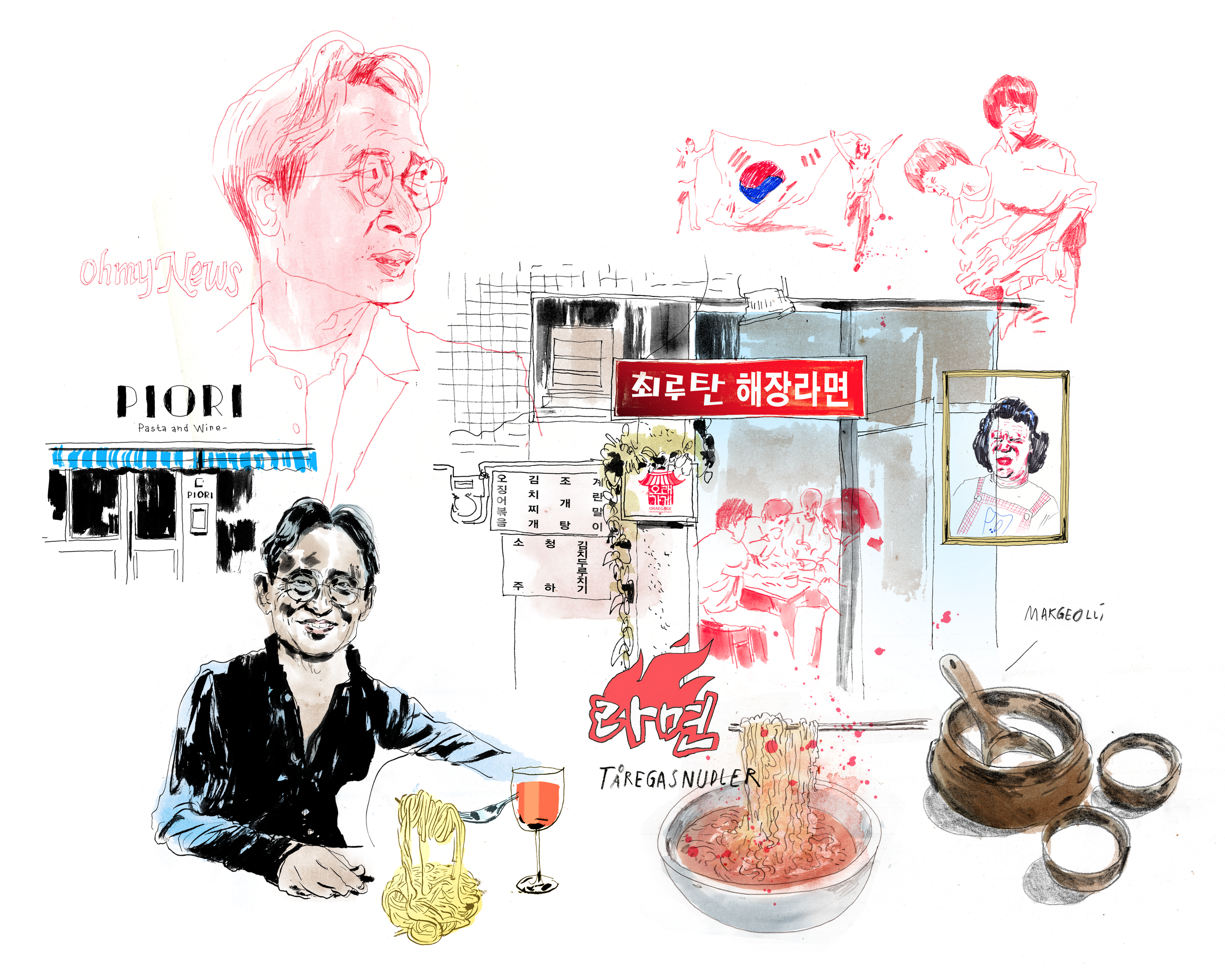
"I spent a year in prison," Oh Yeon-ho tells us over pasta, risotto, and red wine. We're at the restaurant Piori – Pasta and Wine in Seoul. There are good Italian wines in the windows; the façade and awning are kept clean-lined in Mediterranean blue and white. This Italian restaurant at World Cup-ro, side street 10, no. 13 (named after the nearby Seoul World Cup Stadium, built as a flagship for the World Cup) is a flawless element in the gentrification that over the past decade or so has transformed the Seogyo district here, a few stones' throws from super-hip Hongdae.
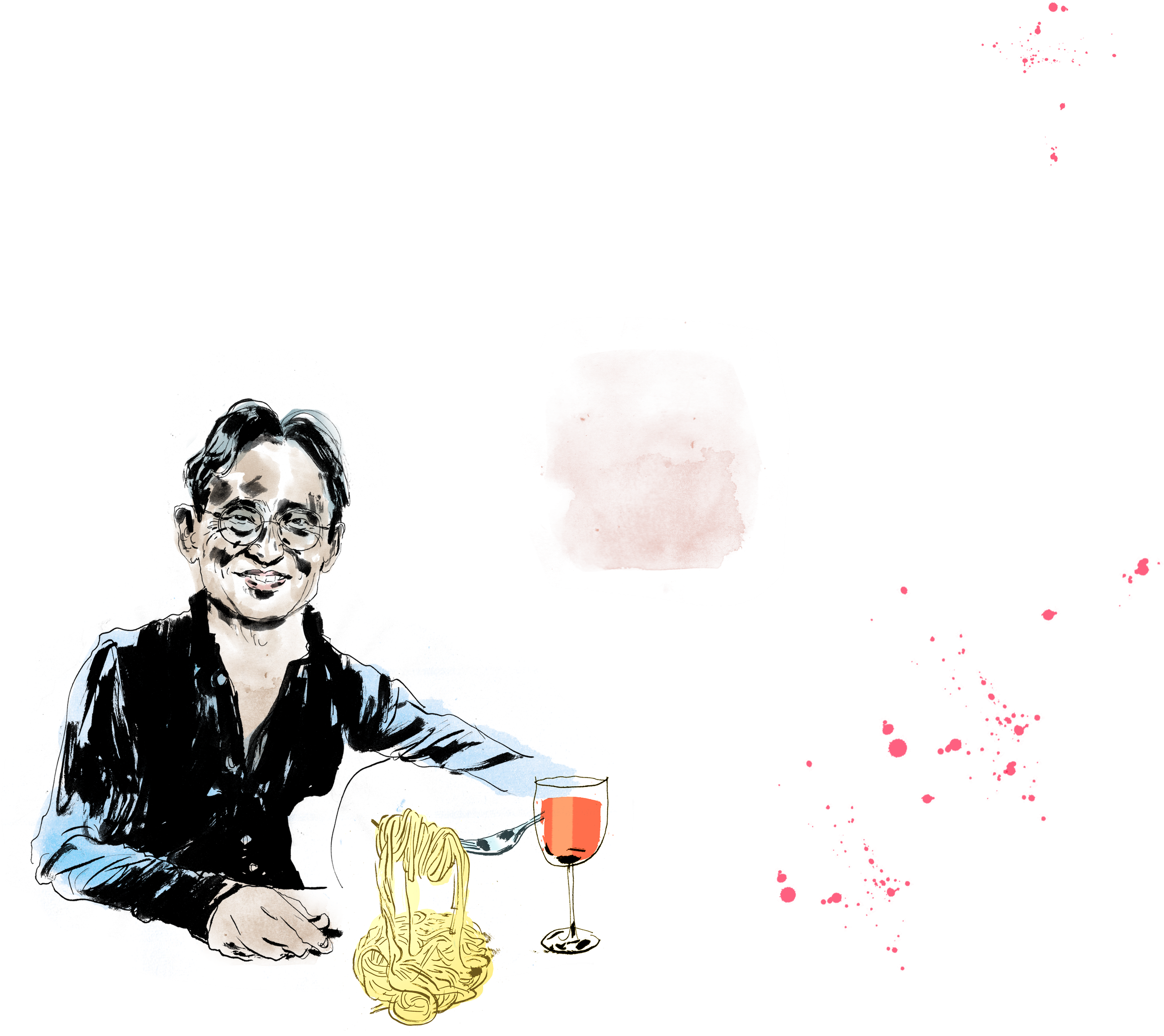
"It was 1986, and I was a student activist at Yonsei University." Yonsei was — and is — firmly in the top three of South Korea's best and most prestigious universities. In the 1980s it was also a bastion of the student movement that led the way in confronting the military dictatorship, and that in those years played a major role in setting South Korea on the path to democracy. "I'd written a letter to middle- and high-school pupils, telling them to wake up to the political situation in South Korea. And not, like me, to open their eyes to political conditions only once they became university students themselves. My fellow student and I had combed through graduation yearbooks from the area's schools; back in the 1980s no one worried about GDPR." Yeon-ho gives a wry smile. "But there was a conservative journalist who got hold of my letter. And his outlet, the pro-regime newspaper Chosun Ilbo, ran it. Shortly after, I was arrested in the street. I spent a year in prison."
Oh Yeon-ho is the CEO of the media group OhmyNews, which since 2000 has sought to reshape the South Korean media landscape through citizen-driven journalism. The platform emerged at the intersection of the IT boom (South Korea was a first-mover in IT infrastructure in the early 2000s) and progressive politics. In those years, a lot of activism moved from student demonstrations in the streets onto the internet. The idea behind OhmyNews was to let ordinary citizens publish news. The concept aimed to strengthen media diversity and shine a critical light on corruption and democratic challenges, including the downsides of South Korea's neoliberal development. OhmyNews has thus been praised for democratizing news production in Korea and has inspired similar initiatives abroad, but it has also faced criticism over political bias and the quality control of citizen articles.
Over the past decade, Yeon-ho has also worked on another major project: he has tried to introduce the efterskole and folk high school (højskole) tradition (Danish residential schools) to South Korea. Yeon-ho hasn't lost the dream of awakening the young generation. Back in 1986 — one year before the first genuinely democratic election in decades, and two years before the Seoul Olympics that truly put South Korea on the world map — Yeon-ho wrote a letter to the little-brother/little-sister generation about what it meant to live under a military dictatorship. Together with his friends, he'd head out to the student restaurants in the Shinchon area, just below Yonsei University.
They exchanged thoughts and ideas, ate cheap food, and drank a lot of unfiltered rice wine (막걸리, makgeolli; a lightly sparkling, sweetish and tangy Korean rice wine). Then they sang songs. Revolutionary songs. Sometimes romantic songs. The restaurants gave them a place where they could sit with their socially critical conversations — and songs. Yeon-ho and his fellow students couldn't always afford to pay for the food and rice wine. So the restaurant owner would write their names down on a pad of paper, so they could pay the next day, the next week, the next month. Some never paid. "They'd gone to prison." Oh smiles wryly again. It was a revolutionary time. A romantic time. A time that can seem incredibly far away as we sit here on World Cup Avenue 13 with a Yeon-ho forty years older, a glass of Italian red wine, pasta and risotto, and talk in hushed voices.
And yet: on 3 December 2024, then-President Yoon Suk-yeol declared martial law in South Korea. The martial law was short-lived, but the aftermath was long and dramatic. The president was removed from office after an impeachment trial. Had he instead succeeded with his plans, it appears the opposition leader Lee Jae-myung would have risked prison. "I could have ended up in prison, too," says Oh Yeon-ho, smiling wryly again.
"At the beginning of 2025, my publishing house released a book written by Lee Jae-myung about his life and political philosophy. Lee has now been elected president for a five-year term. And the book became one of the year's bestsellers." I ask Yeon-ho how the younger generation would have reacted if the December 2024 coup had gone through. It's decades since the student movements were active on university campuses, and it's hard to imagine young people singing revolutionary songs, singing romantic songs, in the back rooms of cheap student restaurants here in 2024–2025.
The longest pause in the conversation falls here. People at the surrounding tables are talking very quietly. It's almost completely silent. Yeon-ho continues: "We already know the answer to that question. My generation of activists had just begun to think about retiring from working life, about pensions, about travelling abroad. That kind of thing. But they had to pull on their winter coats and take to the streets in the period after the coup attempt. It was, however, the younger generation who took to the streets to a greater degree. Day in and day out, they stood in the biting winter cold in the streets. And about 70% of the protesters were women."
In Yeon-ho's student days, the vast majority of student activists who took to the streets — and met the police's tear gas with Molotov cocktails — were young men. Men dominated politics, companies, and the media world in general. Today, five of the last six journalists hired at OhmyNews are women. This generation's Oh Yeon-ho will in all likelihood be a woman. Whether she'll have attended one of his efterskole/folk high schools, inspired by his frequent visits to Denmark, there's no way to know. There are many other visions of where South Korean society should go. The progressives are far from holding a monopoly on new thinking. In these years there's a clear tendency toward a rightward turn, nationalism, and anti-feminism among the younger, male generation. The clash between conservatives and progressives didn't stop with the presidential election of 3 June 2025.
In the meantime, the folk-high-school/efterskole initiative is Yeon-ho's bid to inspire the younger Korean generation. "The Danish-inspired school community is meant as an alternative to the neoliberal competition society, where only the very best succeed. Among other things, the Korean students learn to cook in and for the school community. They take part in planting, tending, and preparing vegetables over the course of the school year." You can find that story in the documentary we've made about the school, Yeon-ho tells us before we say goodbye to him.
A couple of stops further down the metro line from the Seogyo district — with the OhmyNews headquarters and the clean-lined Italian restaurant — lies the student quarter of Shinchon. Shinchon is within walking distance of Yonsei University and a couple of Korea's other top universities. A good portion of the future's leaders in politics, science, media, and business are educated here. Shinchon's 'entertainment zone,' spreading out into the side streets below campus, is always full of university students and young people. There are restaurants, bars, clothing shops, comic cafés, and much more. It's also the place where Yeon-ho earned his university degree — after he returned from a year in prison in the late 1980s. And the place where he demonstrated, drank makgeolli, and sang revolutionary songs.
We've come here to find one of the restaurants he used to frequent. There can't be many restaurants in the quarter that have stood unchanged since the late 1980s. But in the shadow of the Hyundai Department Store, which towers over the district as high as the largest campus buildings, lies the restaurant Phaedra. The reference to Greek mythology rings exotic, but suits a restaurant that was named in 1970s Seoul: dreamily international. The kitchen here is anything but internationally dreamy.
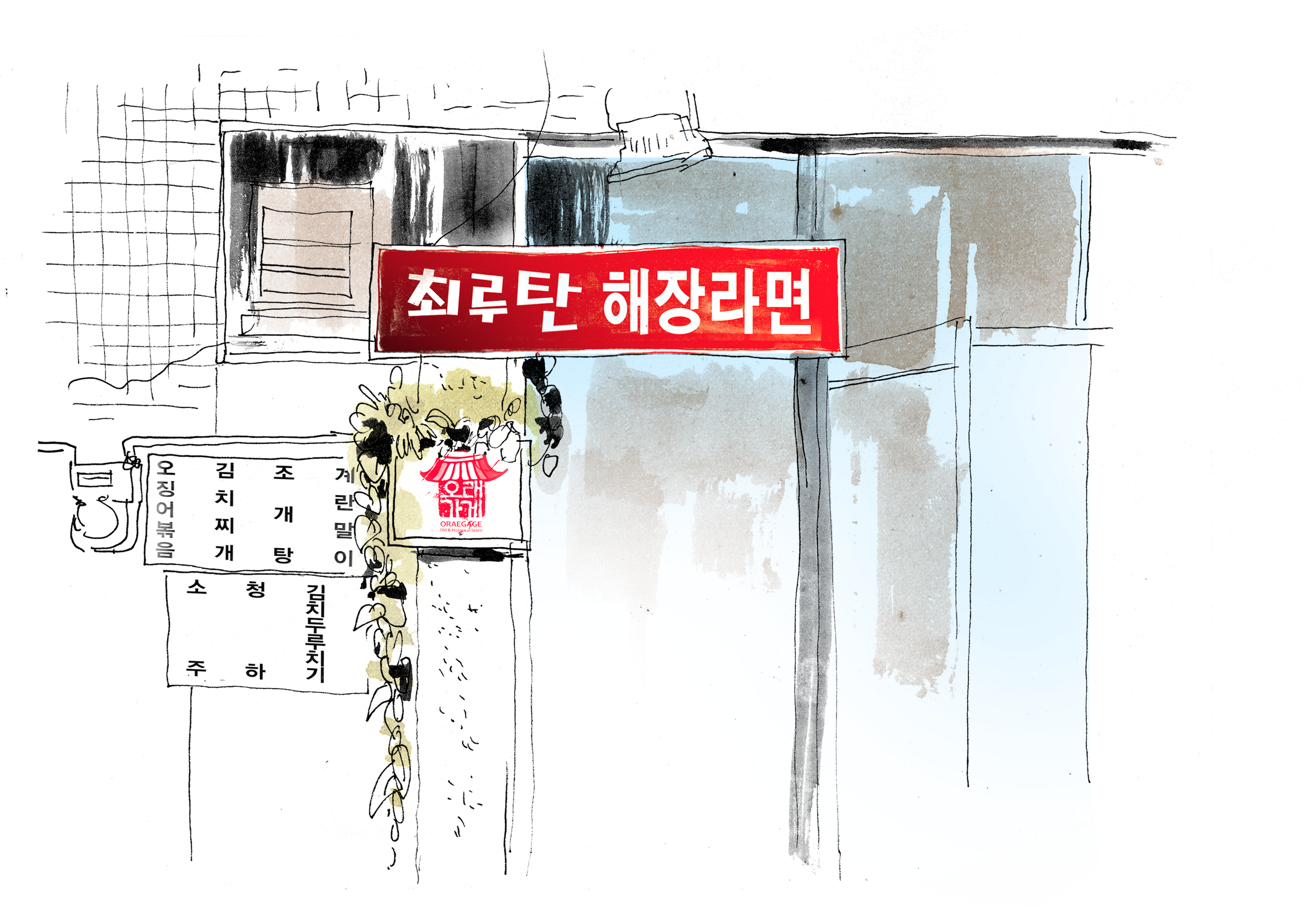
A big sign above the restaurant reads: "Tear-Gas-Hangover Ramyeon [instant noodles]. '70s–'80s memories — just like back then! Phaedra." The whole façade is, in fact, a swarm of signs — Tear-Gas-Hangover Ramyeon on a bright-red background, posters, light fixtures, and ventilation units that would leave the designer of the Italian restaurant — probably every designer in every gentrified corner of Seoul — gasping for breath and floor them. A small plaque put up by the Seoul city government says: 'Oraegage: Old & Historical Store.' In a Seoul in constant transformation, a student restaurant from the 1970s is a piece of living urban history.
The restaurant's female owner tells us that her noodles are so spicy they draw tears — just like when the police threw tear gas at the students back in the day. She points to the wall. Here are handwritten greetings from progressive politicians and other public figures who came to the restaurant in their student years. There are also three framed photographs on a cabinet beside the wall. Two of them are iconic photographs from the democratization movement of the late 1980s. Both are of student activists from Yonsei University. One shows a young man running through a street demonstration carrying the Korean flag. The other is of a young man who, fatally wounded by a tear-gas canister, collapses into the arms of a fellow demonstrator. For many Koreans, these two photographs are the symbol of the movement for democracy in the late 1980s. Beside them is a black-and-white photograph of the restaurant's original female owner. She stands in a floral apron, wearing a lipstick that looks to have been at least as bright red as the restaurant sign outside. Might the book where she wrote down Yeon-ho and his friends' names when they bought noodles and makgeolli on credit still be here somewhere? We don't get the chance to ask the owner, who's a little overwhelmed by the two Danes who've come barrelling in with searching looks, speaking with an accent that rings just as exotic in Korean as 'Phaedra' and 'Piori.' She pulls out a book. Asks about us and where we're from, and takes notes. We've made it into Phaedra's notebook! It's a thoroughly late-1980s vibe.
Our stomachs are still full of risotto and pasta, but we promise ourselves we'll come back to taste her hard-hitting ramyeon and share a bowl of makgeolli with Yeon-ho, the day he lets go of the work of reforming South Korean society's media landscape and school system, and finds the time to travel back from Piori to Phaedra.
All illustrations on this page are by Rasmus Meisler. See more of his work here.